Author

admin

Browsing

On Friday (August 15), Statistics Canada released wholesale trade data for June. The release indicates that sales increased 0.7 percent to C$84.7 billion for the month, with four of seven sectors reporting gains.

The increases were led by the food, beverage and tobacco sector, which increased 1.7 percent to C$15.6 billion, and on a provincial level by Québec, which reported 1.9 percent higher sales at C$15.3 billion. Sales also increased in the mineral, ore and precious metals subsector, rising to C$1.02 billion in June from C$750.84 million recorded in May.

Despite the increases, Statistics Canada notes that more than a third of all businesses questioned said Canada-US trade have tensions affected them, and that sales have been negatively impacted in all seven subsectors.

In the US, the Bureau of Labor Statistics released July consumer price index (CPI) data on Tuesday (August 12). It shows that the all-items index increased 0.2 percent month-on-month, a slight deceleration from the 0.3 percent gain in June.

Core CPI, which excludes the volatile food and energy segments, rose by 0.3 percent in July versus 0.2 percent recorded the previous month. On an annualized basis, the all-items CPI remained steady with an increase of 2.7 percent, but posted a more significant 3.1 percent gain when the food and energy categories were excluded.

On Friday, US President Donald Trump was scheduled to meet with Russian President Vladimir Putin in Alaska, US, for talks to de-escalate the war between Russia and Ukraine. Ukrainian President Volodymyr Zelenskyy was excluded from Friday’s summit, but Trump has said he hopes the meeting will lead to further talks that will include Ukraine.

The two nations have been at war since Russia invaded Ukraine in February 2022. Russia is seeking to retain the territory it has held since near the beginning of the war, while Ukraine says the original borders should be maintained.

Markets and commodities react

In Canada, equity markets were mixed this week.

The S&P/TSX Composite Index (INDEXTSI:OSPTX) was in record territory, closing Wednesday (August 13) at an all-time high of 27,993.43, but it had slipped by Friday to close the week up 0.41 percent at 27,905.49.

The S&P/TSX Venture Composite Index (INDEXTSI:JX) was flat, posting a slight loss of 0.12 percent to 790.77. The CSE Composite Index (CSE:CSECOMP) had another strong week, gaining 3.58 percent to 156.87.

US equity markets rebounded this week and finished near all-time highs.

The S&P 500 (INDEXSP:INX) set a new record on Thursday (August 14), closing at 6,468.53, but slipped to register a 1.49 percent gain on the week to 6,449.79. The Nasdaq 100 (INDEXNASDAQ:NDX) also set a new record of 23,849.04 on Wednesday, but fell in the last two days of trading, recording a weekly gain of 1.08 percent to 23,712.07.

Meanwhile, the Dow Jones Industrial Average (INDEXDJX:.DJI) was above 45,000 points for the first time since December 2024, but failed to achieve a new record. It posted a 2.01 percent gain to finish the week at 44,946.13.

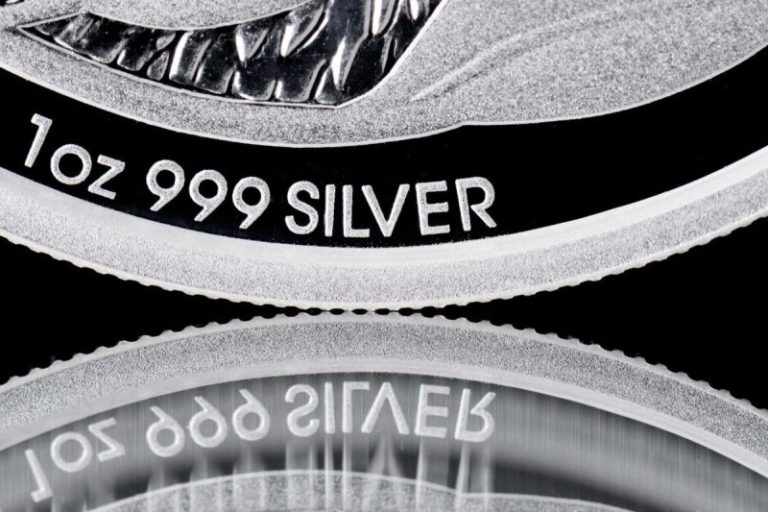
The gold price slumped this week following clarification from the White House that imports of 1 kilogram and 100 ounce gold bars from Switzerland will not face tariffs. Gold had fallen 1.81 percent by 4:00 p.m. EDT on Friday to reach US$3,338.36 per ounce. Silver also retraced this week, losing 0.7 percent to hit US$37.97 per ounce.

Copper saw little change this week, posting a 0.44 percent gain to US$4.54 per pound. The S&P GSCI (INDEXSP:SPGSCI) commodities index posted a slight decline of 0.8 percent by close on Friday, finishing at 545.59.

Top Canadian mining stocks this week

How did mining stocks perform against this backdrop?

Take a look at this week’s five best-performing Canadian mining stocks below.

Stock data for this article was retrieved at 4:00 p.m. EDT on Friday using TradingView’s stock screener. Only companies trading on the TSX, TSXV and CSE with market caps greater than C$10 million are included. Mineral companies within the non-energy minerals, energy minerals, process industry and producer manufacturing sectors were considered.

1. Focus Graphite (TSXV:FMS)

Weekly gain: 94.44 percent
Market cap: C$25.18 million
Share price: C$0.35

Focus Graphite is working to advance its Lac Knife and Lac Tétépisca projects in Québec, Canada.

Lac Knife covers 3,248 hectares in Eastern Québec. An April 2023 updated feasibility study outlines an after-tax net present value of C$284.8 million with an internal rate of return of 22.57 percent and a payback period of 3.38 years. Lac Knife is expected to produce 50,000 metric tons (MT) of graphite concentrate annually over a mine life of 27 years.

For its part, Lac Tétépisca spans 6,629 hectares in Central Québec. An April 2022 technical report shows an indicated resource of 59.3 million MT grading 10.61 percent graphitic carbon for 6.3 million MT of in-situ natural flake graphite. The inferred category stands at 14.8 million MT grading 11.06 percent graphitic carbon for 1.6 million MT.

On Wednesday (August 13), Focus resumed work on the environmental and social impact assessment for Lac Knife. In total, it has to complete 16 technical reports as required by the province to advance to the construction phase. Focus previously halted work due to funding delays, but now expects the reports to be complete in early 2026.

The firm is also moving forward with geochemical analysis of over 1,000 samples collected from 2022 exploration drilling at Lac Tétépisca. It will use the results to finalize a resource estimate, which it expects to deliver this fall.

This week’s news comes after Focus said on August 8 that it had closed a non-brokered private placement for C$891,000. Funds will be used to maintain existing operations and for general capital.

2. Libra Energy Materials (CSE:LIBR)

Weekly gain: 56.67 percent
Market cap: C$13 million
Share price: C$0.235

Libra Energy Materials is a lithium-focused exploration company that is currently working to advance its Flanders North, Flanders South and Soules Bay-Caron (SBC) projects in Ontario, Canada.

The properties are part of a November 2024 earn-in agreement with KoBold Metals. Libra can earn a 75 percent stake by incurring C$33 million in exploration expenditures across the properties over the next six years.

Flanders North and South cover 40,000 hectares, and initial surveys in 2023 revealed hundreds of pegmatites, with surface exposures of up to 200 meters in width and grab samples of up to 2.86 percent lithium oxide.

SBC covers an area of 15,000 hectares and is located near Pickle Lake, Ontario. Exploration work carried out at the property in June 2024 earned the company the Bernie Schnieders Discovery of the Year Award. The discovery included several spodumene-bearing pegmatites with widths of up to 30 meters, and spodumene grades of 15 to 25 percent across SBC. During the program, the company collected 184 grab samples with up to 6.64 percent lithium oxide.

Shares of Libra gained this week, but the company did not release any news.

3. Q-Gold Resources (TSXV:QGR)

Weekly gain: 50 percent
Market cap: C$10.48 million
Share price: C$0.18

Q-Gold Resources is a gold explorer focused on the acquisition of the Quartz Mountain project in Oregon, US. On April 3, it entered into a definitive agreement with Alamos Gold (TSX:AGI,NYSE:AGI) to acquire the property.

The measured and indicated gold resource for Quartz Mountain, which spans 2,000 hectares, comes in at 339,000 ounces at an average grade of 0.87 grams per MT (g/t) from 12.16 million MT of ore; its inferred resource stands at of 1.15 million ounces with an average grade of 0.91 g/t from 39.21 million MT ore.

Q-Gold’s latest news came on August 8. It said company representatives intend to visit the project site for the first time. They expect to conduct sampling of select diamond drill cores and verify the current status of all claims at the project.

4. Gienstar Minerals (CSE:GIEN)

Weekly gain: 49.12 percent
Market cap: C$17.58 million
Share price: C$0.85

Glenstar Minerals is an exploration company working to advance projects in Nevada, US.

Its Green Monster property consists of 35 lode claims and covers 700 acres southwest of Las Vegas. The property hosts nickel, copper, cobalt and zinc mineralization, and has mine workings dating back to the late 1800s.

The most recent update from the property came this past Wednesday, when Glenstar announced that it will switch the focus of its Phase 2 drill program to extension drilling following the discovery of a new polymetallic zone. The drilling will be centered on a high-grade zinc occurrence with grades above 30 percent and assay results of up to 177 parts per million (ppm) silver, 523 ppm nickel, 91.9 ppm cobalt and copper of 0.36 percent.

The company also owns the Wildhorse property in Southern Nevada. The early stage project has had limited exploration, but assays from a sampling program were released on July 23. In that announcement, Glenstar said four grab samples from the Coca Cola zone returned copper grades of 1.6 percent, 5.3 percent, 2.3 percent and 5.1 percent, with an average of 21.6 ppm silver, 156 ppm bismuth and 72.5 ppm tungsten.

Four samples were also collected from the Highland zone, which returned average grades of 0.16 percent copper, 1.23 percent zinc, 1.98 percent lead and 43 ppm silver.

5. Sterling Metals (TSXV:SAG)

Weekly gain: 47.69 percent
Market cap: C$13.3 million
Share price: C$0.48

Sterling Metals is an exploration company working to advance a trio of projects in Canada. Over the past year, its primary focus has been on exploration at its brownfield Soo copper project in Ontario. The 25,000 hectare property has hosted two past-producing copper mines and has the potential for larger intrusion-related copper mineralization.

On January 15, Sterling announced results from a 3D induced-polarization and resistivity survey that covered an area of 5 kilometers by 3 kilometers and revealed multiple high-priority drill-ready targets.

The company intends to use the survey results, along with historical exploration, to inform a drill program at the site.

The company’s other two projects are Adeline, a 297 square kilometer district-scale property with sediment-hosted copper and silver mineralization along 44 kilometers of strike, and Sail Pond, a silver, copper, lead and zinc project that hosts a 16 kilometer long linear soil anomaly and has seen 16,000 meters of drilling.

Both properties are located in Newfoundland and Labrador.

The most recent news from the company came on August 7, when Sterling reported that it had commenced Phase 2 drilling at Soo. The 3,000 to 5,000 meter program is designed to test areas defined through the Phase 1 program, as well as historic drill data and geophysical interpretations.

FAQs for Canadian mining stocks

What is the difference between the TSX and TSXV?

The TSX, or Toronto Stock Exchange, is used by senior companies with larger market caps, and the TSXV, or TSX Venture Exchange, is used by smaller-cap companies. Companies listed on the TSXV can graduate to the senior exchange.

How many mining companies are listed on the TSX and TSXV?

As of February 2025, there were 1,572 companies listed on the TSXV, 905 of which were mining companies. Comparatively, the TSX was home to 1,859 companies, with 181 of those being mining companies.

Together the TSX and TSXV host around 40 percent of the world’s public mining companies.

How much does it cost to list on the TSXV?

There are a variety of different fees that companies must pay to list on the TSXV, and according to the exchange, they can vary based on the transaction’s nature and complexity. The listing fee alone will most likely cost between C$10,000 to C$70,000. Accounting and auditing fees could rack up between C$25,000 and C$100,000, while legal fees are expected to be over C$75,000 and an underwriters’ commission may hit up to 12 percent.

The exchange lists a handful of other fees and expenses companies can expect, including but not limited to security commission and transfer agency fees, investor relations costs and director and officer liability insurance.

These are all just for the initial listing, of course. There are ongoing expenses once companies are trading, such as sustaining fees and additional listing fees, plus the costs associated with filing regular reports.

How do you trade on the TSXV?

Investors can trade on the TSXV the way they would trade stocks on any exchange. This means they can use a stock broker or an individual investment account to buy and sell shares of TSXV-listed companies during the exchange’s trading hours.

Article by Dean Belder; FAQs by Lauren Kelly.

Securities Disclosure: I, Dean Belder, hold no direct investment interest in any company mentioned in this article.

Securities Disclosure: I, Lauren Kelly, hold no direct investment interest in any company mentioned in this article.

This post appeared first on investingnews.com
Apple on Thursday announced a redesigned blood oxygen feature for some Apple Watch users, following a yearslong intellectual property dispute over the capability.

Apple said the redesigned feature is coming to some Apple Watch Series 9, Series 10 and Apple Watch Ultra 2 users on Thursday. The update was possible because of a recent U.S. Customs ruling, the company said.

In 2023, the International Trade Commission found that Apple’s blood oxygen sensors infringed on intellectual property from Masimo, a medical technology company. Apple paused the sale of some of its watches and began selling modified versions of the wearables without the blood oxygen feature.

“Apple’s teams work tirelessly to create products and services that empower users with industry-leading health, wellness, and safety features that are grounded in science and have privacy at the core,” the company said in a release announcing the feature rollout.

CNBC has reached out to Masimo for comment.

Users who do not currently have the feature will be able to access it by updating their iPhone to iOS 18.6.1 and their Apple Watch to watchOS 11.6.1, Apple said. Users will be able to see their results in the Respiratory section of the Health app.

Apple has been pushing deeper into health care in recent years.

The company recently released a sleep apnea detection feature for Apple Watch users and hearing health features for its AirPods headphones. In February, Apple launched its first major health study in five years.

This post appeared first on NBC NEWS

Warren Buffett’s Berkshire Hathaway revealed a new stake in troubled insurer UnitedHealth last quarter, according to a regulatory filing, a surprising buy because of the company’s current reputation, but perhaps not considering his history of bargain investing.

The Omaha-based conglomerate bought more than 5 million shares in the health care firm for a stake worth about $1.6 billion at the end of June. The stake puts it as the 18th biggest position in the Berkshire portfolio behind Amazon and Constellation Brands, according to VerityData.

Berkshire’s equity portfolio is worth about $300 billion, so it is possible that Buffett’s two investing lieutenants Todd Combs and Ted Weschler were more responsible for this purchase rather than the “Oracle of Omaha” himself. Buffett said one of his investment managers was behind the Amazon investment in 2019.

The insurer’s stock shot up 6% in extended trading following Berkshire’s disclosure.

Shares of UnitedHealth were down nearly 50% for 2025 through Thursday’s close before Buffett’s filing. The largest private health insurer has become the face of a public blowback in this country against the rising costs of health care. UnitedHealth is currently facing a Justice Department investigation into its Medicare billing practices.

In May, the company pulled its annual earnings outlook and CEO Andrew Witty stepped down. Last month, UnitedHealth gave a new 2025 outlook that was well short of Wall Street estimates, hitting the stock further.

Buffett, who’s turning 95 this month, has been critical of the healthcare system in the U.S., calling it a “tapeworm” on the economy due to its high costs. In 2018, he, along with Jeff Bezos and Jamie Dimon, launched a joint venture to improve healthcare for their employees and potentially for all Americans, but it was eventually shut down.

UnitedHealth isn’t the only stock Berkshire picked up recently. In fact, the conglomerate also took small stakes in steel manufacturer Nucor, outdoor advertising company Lamar Advertising and security firm Allegion. Berkshire also got back into homebuilders Lennar and DR Horton.

Shares of Nucor jumped nearly 8% in afterhours trading, while Lennar and DR Horton popped about 3% each.

Buffett also pared his positions in Bank of America and Apple. The Apple stake was cut by about 7%. Berkshire’s largest positions as of the end of the second quarter were Apple, American Express, Bank of America, Coca-Cola and Chevron.

The legendary investor is stepping down as Berkshire CEO at the end of the year, handing over the reins to Greg Abel. Buffett will stay on as chairman of the board. It’s still unclear who will be in charge of Berkshire’s gigantic equity portfolio, though Buffett has alluded that Abel will be making all capital allocation decisions at the conglomerate.

UnitedHealth attracted other buyers last quarter, according to filings, including Michael Burry and Appaloosa Management’s David Tepper. Shares of the insurer are trading at a price-earnings ratio of just under 12, near its lowest in more than a decade.

There was speculation regarding a mystery stock Buffett was buying as Berkshire had asked for permission to keep certain holdings secret last quarter. It turns out the secret stock was a combination of multiple positions and likely the stakes added in DR Horton, Nucor and Lennar “A” shares.

This post appeared first on NBC NEWS

Lyft said Thursday its co-founders, Logan Green and John Zimmer, are stepping down from the ride-hailing services provider’s board, following the completion of a two-year transition plan.

Green and Zimmer began serving as the chair and vice chair of Lyft’s board in 2023 after stepping down as CEO and president, respectively, handing the reins to David Risher, who has been a board member since 2021.

The duo founded Lyft in 2012, with the company now operating across four continents and nearly 1,000 cities.

Sean Aggarwal, who was the chair of Lyft’s board from 2019 to 2023, will reprise his role.

Zimmer is launching a new consumer-focused business venture named YES&, while Green will continue as a venture partner at Autotech Ventures, a firm investing in the mobility and transportation sector.

Lyft, which recently completed its nearly $200 million acquisition of European mobility platform FreeNow, has signed a deal with China’s Baidu 9888.HK to introduce the search-engine giant’s robotaxis in the region.

It posted revenue of $1.59 billion in the second quarter, missing estimates of $1.61 billion, according to data compiled by LSEG.

Rides on Lyft’s platform grew 14% to a record high of 234.8 million in the quarter, slightly below estimates of 235.9 million, per Visible Alpha.

This post appeared first on NBC NEWS

(TheNewswire)

Vancouver, British Columbia / August 14, 2025 ‑ TheNewswire – Harvest Gold Corporation (TSXV: HVG) (‘ Harvest Gold ‘ or the ‘ Company ‘) is pleased to provide an update on exploration activities across its 100%-owned Quebec properties, all located in the Abitibi Greenstone Belt within the Urban-Barry area. The Company has mobilized a diamond drill to commence drilling at its Mosseau property, initiated a property-wide till sampling program at its Urban-Barry project, and completed a high-resolution airborne magnetic survey over the LaBelle property and recently acquired claims southeast of Mosseau .

Rick Mark, President and CEO of Harvest Gold states: ‘We are all very excited to be advancing exploration on all three of our Urban-Barry area properties, simultaneously. This includes our much-anticipated 5000 meter diamond drilling program at Mosseau and an extensive first time geochemistry examination at the large Urban-Barry property. And, we have now completed a first time look at another sizable property, Labelle, through an airborne geophysics program that is continuous with the very revealing mag survey done last year on Mosseau.’

Diamond Drilling at Mosseau

The diamond drill is expected to be mobilized this week to the Mosseau property. Phase I of the planned 5,000-metre diamond drilling program at Mosseau follows an extensive compilation of regional data, a high-resolution magnetic survey, and encouraging results from the soil sampling program and reconnaissance mapping and prospecting programs. Drilling will focus on high-priority targets in the northern portion of the property, which hosts numerous historical gold showings, as well as in the Central area where recent geophysical and geochemical surveys have identified several quality targets for gold mineralization (Figures 2 and 3).

Till Sampling at Urban-Barry

Harvest Gold has also commenced fieldwork at its 19 km-long Urban-Barry property, which averages 4 km in width. Limited prospecting and mapping were conducted last summer; however, due to some reasonably extensive overburden, the Company determined that a till sampling survey would be the most effective tool to evaluate the property’s gold potential. The survey is being conducted by IOS Services Géoscientifiques and consists of NW-SE oriented sampling lines spaced 1,000–1,500 metres apart, perpendicular to the dominant ice-flow direction, with individual samples collected every 250–300 metres. A total of 145 samples are planned (Figure 4).

Magnetic Survey at LaBelle

This week, the Company completed a high-resolution airborne magnetic survey over the LaBelle property and newly staked claims, at a 50-metre line spacing totaling 1,368 line-kilometres (Figure 5). Conducted by Novatem Airborne Geophysics, the survey covers an area with minimal historical exploration, but is interpreted from government regional magnetic data to be the southeast extension of the mineralized corridor hosting known mineralization at Mosseau.

These programs are designed to expand the Company’s exploration pipeline and support future drill targeting across its broad Quebec project portfolio.

About Harvest Gold Corporation

Harvest Gold is focused on exploring for near surface gold deposits and copper-gold porphyry deposits in politically stable mining jurisdictions. Harvest Gold’s board of directors, management team and technical advisors have collective geological and financing experience exceeding 400 years.

Harvest Gold has three active gold projects focused in the Urban Barry area, totalling 377 claims covering 20,016.87 ha , located approximately 45-70 km west of Gold Fields Limited’s – Windfall Deposit (Figure 1).

Harvest Gold acknowledges that the Mosseau Gold Project straddles the Eeyou Istchee-James Bay and Abitibi territories.  Harvest Gold is committed to developing positive and mutually beneficial relationships based on respect and transparency with local Indigenous communities.

Harvest Gold’s three properties, Mosseau, Urban-Barry and LaBelle, together cover over 50 km of favorable strike along mineralized shear zones.


Click Image To View Full Size

Figure 1: Project Location: Urban-Barry Greenstone Belt


Click Image To View Full Size

Figure 2: Magnetic Domains across the Northern and Central Target Areas of Mosseau


Click Image To View Full Size

Figure 3: Drill targets on the Mosseau property (magnetics)


Click Image To View Full Size

Figure 4: Till Sampling program in progress on the Urban-Barry Property


Click Image To View Full Size

Figure 5:  Recently completed airborne magnetic survey lines on the LaBelle and Mosseau (2025) and airborne magnetic results of Mosseau (2024)

Qualified Person Statement

All scientific and technical information in this news release has been prepared and approved by Louis Martin, P.Geo., Technical Advisor to the Company and considered a Qualified Person for the purposes of NI 43-101.

ON BEHALF OF THE BOARD OF DIRECTORS

Rick Mark
President and CEO
Harvest Gold Corporation

For more information please contact:

Rick Mark or Jan Urata
@ 604.737.2303 or
info@harvestgoldcorp.com

Neither TSX Venture Exchange nor its Regulation Services Provider (as that term is defined in the policies of the TSX Venture Exchange) accepts responsibility for the adequacy or accuracy of this release.

Forward Looking Information

This news release includes certain statements that may be deemed ‘forward looking statements’. All statements in this news release, other than statements of historical facts, that address events or developments that Harvest Gold expects to occur, are forward looking statements. Forward looking statements are statements that are not historical facts and are generally, but not always, identified by the words ‘expects’, ‘plans’, ‘anticipates’, ‘believes’, ‘intends’, ‘estimates’, ‘projects’, ‘potential’ and similar expressions, or that events or conditions ‘will’, ‘would’, ‘may’, ‘could’ or ‘should’ occur.

Although the Company believes the expectations expressed in such forward-looking statements are based on reasonable assumptions, such statements are not guarantees of future performance and actual results may differ materially from those in the forward-looking statements. Factors that could cause the actual results to differ materially from those in forward looking statements include market prices, exploitation and exploration successes, and continued availability of capital and financing, and general economic, market or business conditions. Investors are cautioned that any such statements are not guarantees of future performance and actual results or developments may differ materially from those projected in the forward-looking statements. Forward looking statements are based on the beliefs, estimates and opinions of the Company’s management on the date the statements are made. Except as required by securities laws, the Company undertakes no obligation to update these forward-looking statements in the event that management’s beliefs, estimates or opinions, or other factors, should change.

Copyright (c) 2025 TheNewswire – All rights reserved.

News Provided by TheNewsWire via QuoteMedia

This post appeared first on investingnews.com

The world’s top gold producers delivered a string of robust second-quarter results, buoyed by record prices and resilient operations as investors continue to seek refuge in the yellow metal amid growing economic uncertainty.

With spot gold trading above US$3,400 per troy ounce, just shy of its April all-time high of US$3,448.50, the world’s largest gold producers posted higher earnings and stronger cash flow in their recent Q2 results.

Below is a breakdown of how a few major players fared in Q2.

Barrick nearly doubles profit margins

Barrick Mining (TSX:ABX,NYSE:B) formerly Barrick Gold, reported a 97 percent year-on-year jump in net income to US$1.25 billion for the quarter, compared to US$634 million a year earlier.

Earnings per share rose to US$0.47 while operating cash flow in the first half reached US$2.5 billion, up 32 percent from 2024. Free cash flow more than doubled to US$770 million, supported by higher commodity prices.

Gold production climbed 5 percent from the first quarter, while copper output surged 34 percent, led by strong performance at Zambia’s Lumwana mine. Nevada Gold Mines boosted output by 11 percent, while Pueblo Viejo in the Dominican Republic posted a 28 percent increase as expansion work in the site advanced.

“From the ramp-up at Goldrush to the progress at Pueblo Viejo, Lumwana and Reko Diq, not to mention the transformational potential of Fourmile, we’re demonstrating the strength and depth of our portfolio,” president and chief executive Mark Bristow said in the recent Q2 report.

The company also recently agreed to sell its Alturas Project in Chile to a Boroo subsidiary for US$50 million upfront plus a royalty, with proceeds earmarked for funding future ventures

Kinross outpaces gold price gains

Kinross Gold Corporation (TSX:K,NYSE:KGC) posted record attributable free cash flow of US$646.6 million in the second quarter, alongside operating cash flow of US$992.4 million. Adjusted net earnings jumped to US$541 million from US$174.7 million a year earlier.

Further, the company achieved a 21 percent margin increase from the first quarter, outpacing the 15 percent rise in gold prices over the same period.

“Our portfolio of mines continued to perform well during the quarter contributing to a strong first half of the year and positioning us well to achieve our full-year guidance,” CEO J. Paul Rollinson said.

Kinross said that it expects to produce 2 million gold-equivalent ounces in 2025 at an average production cost of US$1,120 per ounce.

Paracatu in Brazil was the company’s top-producing asset, while Tasiast in Mauritania began mining the Fennec satellite deposit. US-based Bald Mountain also reported higher output at lower costs.

The company also advanced key projects, including its Great Bear exploration program in Ontario, engineering work at Round Mountain Phase X in Nevada, and drilling at the Curlew Basin project in Washington.

Agnico Eagle delivers, shares gain

Agnico Eagle’s (TSX:AEM,NYSE:AEM) operational consistency and cost control helped drive a six-day share price rally, culminating in a 10.06 percent gain over the past week.

In the second quarter, the company produced 866,029 ounces of gold, maintaining full-year guidance of 3.3 to 3.5 million ounces. Adjusted earnings per share came in at US$1.94, prompting analysts to raise 2025 profit forecasts by US$0.70 to US$6.94.

Analysts cited the company’s steady performance despite rising unit costs, noting its appeal as a defensive play in the sector. Bank of America raised its price target to US$173 due to rising optimism about the firm’s growth prospects.

Newmont rides sector momentum

Newmont (TSX:NGT,NYSE:NEM) posted higher sales and net income for the quarter while authorizing a new share repurchase program and declaring a quarterly dividend.

The miner also renewed a key lease in Ghana. Shares rose 36 percent over the last quarter, outpacing the US Metals and Mining industry’s 24.1 percent return.

The performance came despite a drop in the company’s gold production. Rather, Newmont underscored the role of shareholder returns and strategic asset moves in supporting investor sentiment. Over the past three years, Newmont has delivered a total shareholder return of 63.75 percent.

Gold outlook: Gold shines during volatility

The sector’s strong quarter unfolded against a favorable macro backdrop.

Gold, which has gained about 30 percent year-to-date, has been buoyed by safe-haven flows. The metal’s latest rally began after spot prices dipped to US$3,311.80 in early August, then climbed back above US$3,418 by the first week of August..

The Federal Reserve cut rates by a full percentage point in late 2024 but has held steady this year, citing the need for more data on how tariffs affect inflation. Lower rates generally enhance gold’s appeal by reducing the opportunity cost of holding non-yielding assets..

Securities Disclosure: I, Giann Liguid, hold no direct investment interest in any company mentioned in this article.

This post appeared first on investingnews.com
Allied Critical Metals Inc. (CSE: ACM,OTC:ACMIF) (OTCQB: ACMIF) (FSE: 0VJ0) (‘Allied’ or the ‘Company’) is pleased to announce it has closed the first tranche (the ‘First Tranche’) of the previously announced non-brokered private placement offering (the ‘Offering’) of 14,996,986 units of the Company (the ‘Units’ and, each, a ‘Unit’) at a price of $0.30 per Unit raising gross proceeds $4,499,095.80. Each Unit will be comprised of one common share of the Company (a ‘Share’) and one-half of one common share purchase warrant (each whole common share purchase warrant, a ‘Warrant’). Each Warrant will entitle the holder thereof to acquire one additional Share (each a ‘Warrant Share’) at a price of $0.40 per Warrant Share and will be exercisable for a period of 24 months from the date of issuance.

The Company further announces that it has increased the size of the Offering to raise combined gross proceeds (including the First Tranche) of up to $5,000,000 in aggregate. The Company expects to close a final tranche of the Offering on or about August 18, 2025 (the ‘Final Tranche‘).

The Company intends to use the net proceeds of the Offering for ongoing exploration and development activities on the Borralha Tungsten Project and Vila Verde Tungsten Project and for additional working capital.

The Offering is subject to approval of the Canadian Securities Exchange (the ‘CSE‘), and all Units and securities of the Company issued pursuant to the Offering will be subject to a four month hold period from the date of issuance. The Offering will not result in the creation of a new insider or control person of the Company.

The Company paid finder’s fees of $310,386.30 in cash and 1,034,621 Finders Warrants (as defined below) in connection with the First Tranche of the Offering to eligible finders in accordance with policies of the CSE and applicable securities laws comprised of (i) a cash commission of up to 7% of the gross proceeds of the First Tranche, and (ii) a number of finders warrants (‘Finders Warrants‘), equal to up to 7% of the number of Units issued under the Offering with each Finders Warrant exercisable for one additional Unit of the Company for a period of 24 months at $0.30 per Unit from the date of issuance.

The Company may also pay finder’s fees in connection with the Final Tranche of the Offering to eligible finders in accordance with policies of the CSE and applicable securities laws consisting of (i) a cash commission of up to 7% of the gross proceeds of the Final Tranche, and (ii) a number of Finders Warrants equal to up to 7% of the number of Units issued under the Final Tranche.

This press release shall not constitute an offer to sell or the solicitation of an offer to buy securities in the United States, nor shall there be any sale of the securities in any jurisdiction in which such offer, solicitation or sale would be unlawful. The securities being offered have not been, nor will they be, registered under the 1933 Act or under any U.S. state securities laws, and may not be offered or sold in the United States absent registration or an applicable exemption from the registration requirements of the 1933 Act, as amended, and applicable state securities laws.

About Allied Critical Metals Inc.

Allied Critical Metals Inc. (CSE: ACM,OTC:ACMIF) (OTCQB: ACMIF) (FSE: 0VJ0) is a Canadian-based mining company focused on the expansion and revitalization of its 100% owned past producing Borralha Tungsten Project and the Vila Verde Tungsten Project in northern Portugal. Tungsten has been designated a critical metal by the United States and other western countries, as they are aggressively seeking friendly sources of this unique metal. Currently, China, Russia and North Korea represent approximately 86% of the total global supply and reserves. The tungsten market is estimated to be valued at approximately USD $5 to $6 billion and it is used in a variety of industries such as defense, automotive, manufacturing, electronics, and energy.

Please visit our website at www.alliedcritical.com.

Also visit us at:

LinkedIn: https://www.linkedin.com/company/allied-critical-metals-inc
X: https://x.com/@alliedcritical/
Instagram: https://www.instagram.com/alliedcriticalmetals/

ON BEHALF OF THE BOARD OF DIRECTORS

Per: ‘Roy Bonnell’

Roy Bonnell
Chief Executive Officer and Director

Contact Information

For further information or investor relations inquiries, please contact:
Dave Burwell, Vice President, Corporate Development
Tel: 403 410 7907 | Toll Free: 1-888-221-0915
Email: daveb@alliedcritical.com

The Canadian Stock Exchange does not accept responsibility for the adequacy or accuracy of this release.

Cautionary Statement Regarding Forward-Looking Information

This news release contains ‘forward-looking statements’, including with respect to the use of proceeds. Wherever possible, words such as ‘may’, ‘would’, ‘could’, ‘should’, ‘will’, ‘anticipate’, ‘believe’, ‘plan’, ‘expect’, ‘intend’, ‘estimate’, ‘potential for’ and similar expressions have been used to identify these forward-looking statements. These forward-looking statements reflect the current expectations of the Company’s management for future growth, results of operations, performance and business prospects and opportunities and involve significant known and unknown risks, uncertainties and assumptions, including, without limitation, those listed in the Company’s Listing Statement and other filings made by the Company with the Canadian securities regulatory authorities (which may be viewed under the Company’s profile at www.sedarplus.ca). Examples of forward-looking statements in this news release include, but are not limited to, statements regarding the proposed timeline and use of proceeds for exploration and development of the Company’s mineral projects as described in the Company’s Listing Statement, news releases, and corporate presentations. Should one or more of these risks or uncertainties materialize or should assumptions underlying the forward-looking statements prove incorrect, actual results, performance or achievements may vary materially from those expressed or implied by the forward-looking statements contained in this news release. These factors should be considered carefully, and prospective investors should not place undue reliance on the forward-looking statements. This list is not exhaustive of the factors that may affect any of the Company’s forward-looking statements and reference should also be made to the Company’s Listing Statement dated April 23, 2025 and news release dated May 16, 2025, and the documents incorporated by reference therein, filed under its SEDAR+ profile at www.sedarplus.ca for a description of additional risk factors. The Company disclaims any intention or obligation to revise forward-looking statements whether as a result of new information, future developments or otherwise, except as required by law.

Not for distribution to U.S. news wire services or dissemination in the United States

To view the source version of this press release, please visit https://www.newsfilecorp.com/release/262558

News Provided by Newsfile via QuoteMedia

This post appeared first on investingnews.com

Ulta Beauty and Target said Thursday that they have decided to end a deal that opened makeup and beauty shops in hundreds of Target’s stores.

Shares of Target fell about 2% in early trading, while Ulta’s stock slid about 1%.

In a news release, the companies said the partnership — which also added some of Ulta’s merchandise to Target’s website — will end in August 2026. Target had added more than 600 Ulta Beauty shops to its stores since 2021, according to a company spokesperson. That’s nearly a third of Target’s 1,981 U.S. stores.

Ulta Beauty at Target shops carried a smaller and rotating assortment of the merchandise at the beauty retailer’s own stores. They were staffed by Target’s employees.

The loss of the popular beauty retailer’s products could be another blow to Target as it tries to woo back both shoppers and investors. Target’s annual sales have been roughly flat for four years and it expects sales to decline this fiscal year. Shares of the company are worth less than half of what the were back in 2021, when they hit an all-time closing high of $266.39. It also has faced backlash over both its Pride collection and its rollback of key diversity, equity and inclusion initiatives.

Store traffic for Target has declined year over year nearly every week from the week of Jan. 27, days after the company’s DEI announcement, through the week of Aug. 4, according to Placer.ai, an analytics firm that uses anonymized data from mobile devices to estimate overall visits to locations. Target traffic had been up weekly year over year in the four weeks before Jan. 27.

The only exceptions to that trend were the two weeks on either side of Easter, when traffic rose less than 1% year over year, the firm’s data showed.

On earnings calls and in investor presentations, leaders of the Minneapolis-based company had touted Ulta’s shops and its trendy beauty brands as a way to drive store traffic.

At a investor presentation in New York City in March, CEO Brian Cornell highlighted beauty as a growth category for Target and cited it as reason for confidence in Target’s long-term business. He said the company had gained market share in beauty and its sales in the category rose by nearly 7% in the fiscal year that ended in early February.

Target’s CEO Brian Cornell, 66, is expected to depart the company soon. The longtime Target leader renewed his contract for approximately three years in September 2022 after the board scrapped its retirement age of 65.

David Bellinger, an analyst for Mizuho Securities who covers retailers, said in an equity research note on Thursday that Target’s “messy in-store operations” as well as issues with retail theft and insufficient staffing at stores likely contributed to the companies ending their partnership.

“Overall, we see losing the Ulta shop-in-shop relationship as a negative development and something else Target’s next CEO will have to grapple with,” he wrote.

In a statement on Thursday, Target Chief Commercial Officer Rick Gomez said the discounter is “proud of our shared success with Ulta Beauty and the experience we’ve delivered together.”

“We look forward to what’s ahead and remain committed to offering the beauty experience consumers have come to expect from Target — one centered on an exciting mix of beauty brands with continuous newness, all at an unbeatable value,” he said.

In a statement, Ulta’s Chief Retail Officer Amiee Bayer-Thomas described the Target deal as “one of many unique ways we have brought the power of beauty to guests nationwide.”

“As we continue to execute our Ulta Beauty Unleashed plans, we’re confident our wide-ranging assortment, expert services and inspiring in-store experiences will reinforce our leadership in beauty and define the next chapter of our brand,” she said.

This post appeared first on NBC NEWS