Galan Lithium (GLN:AU) has announced Trading Halt
Download the PDF here.
This post appeared first on investingnews.com
Galan Lithium (GLN:AU) has announced Trading Halt
Download the PDF here.

As of April 9, 2025, Bitcoin (BTC) is trading at approximately $77,766, marking a significant drop from its January peak of over $109,000. This Bitcoin price dip highlights the heightened volatility in the cryptocurrency market, influenced by growing geopolitical tensions and recent tariff announcements.
Bitcoin price dip have always been a hallmark of its market behavior, but recent economic indicators have intensified these movements. The cryptocurrency fell sharply amid a global crypto selloff, with Ether also leading declines. Analysts attribute this to risk-off sentiment in broader financial markets as investors react to rising inflation, interest rates, and the ripple effects of U.S. trade policies.
Data from Yahoo Finance and MarketWatch show that Bitcoin touched an intraday low of $74,772 before recovering slightly. This steep drop comes just weeks after the coin hovered comfortably above the $100,000 mark, signaling increasing trader hesitation.
The reintroduction of aggressive U.S. trade tariffs has significantly impacted global markets. In particular, investors fear that escalating trade tensions with China and other nations may trigger another round of economic slowdown. These fears have not spared cryptocurrencies. Despite being considered a hedge against fiat inflation, Bitcoin is still viewed as a risky asset in volatile climates, prompting panic-selling among short-term holders.
Much like traditional equities, the crypto market responded sharply to news of fresh tariffs, with traders offloading high-volatility assets. Analysts suggest that institutional investors, who played a major role in Bitcoin’s surge to all-time highs, are now reassessing their exposure amid macroeconomic headwinds.
Ether (ETH), the second-largest cryptocurrency, saw a similar downward trend, falling more than 5% in the same trading window. Other major altcoins like Solana (SOL), XRP, and Cardano (ADA) also posted significant losses. This coordinated pullback across the crypto landscape underlines the interconnectedness of digital asset markets and investor sentiment.
The crypto fear and greed index, which gauges market emotion, has shifted sharply toward “fear,” reinforcing the cautious outlook across the sector.
The current Bitcoin price dip has prompted both retail and institutional investors to rebalance their portfolios. Many are shifting towards less volatile assets like gold and U.S. treasury bonds, leading to short-term sell pressure in Bitcoin. With upcoming halving cycles and continued interest from global regulators, the long-term trajectory of Bitcoin remains uncertain but still promising for long-term believers.
Market strategists from Barron’s and Bloomberg suggest that this dip may be temporary, especially if inflation and interest rates stabilize in the coming months. Some see the correction as a healthy reset, paving the way for sustainable future growth. Others warn that if geopolitical tensions worsen, Bitcoin could revisit sub-$70K levels.
Investors are encouraged to monitor developments in the global economic landscape, including central bank actions and trade negotiations, which will undoubtedly shape Bitcoin’s next moves.
Bitcoin’s price dip below $80,000 in April 2025 signals a broader market correction triggered by trade war fears and shifting economic policies. However, history shows that Bitcoin has often rebounded stronger after periods of doubt. Whether this is a short-term drop or a longer-term reset, one thing is certain: Bitcoin continues to mirror the complexities of the global financial landscape, and investors must stay informed and adaptable.
Key takeaway: As global tariffs return and inflation lingers, Bitcoin’s short-term volatility may persist. Long-term investors, however, still view dips as potential entry points into a decentralized future.
The post Bitcoin Price Dip Below $80K Amid Trade Tariff Fears appeared first on FinanceBrokerage.
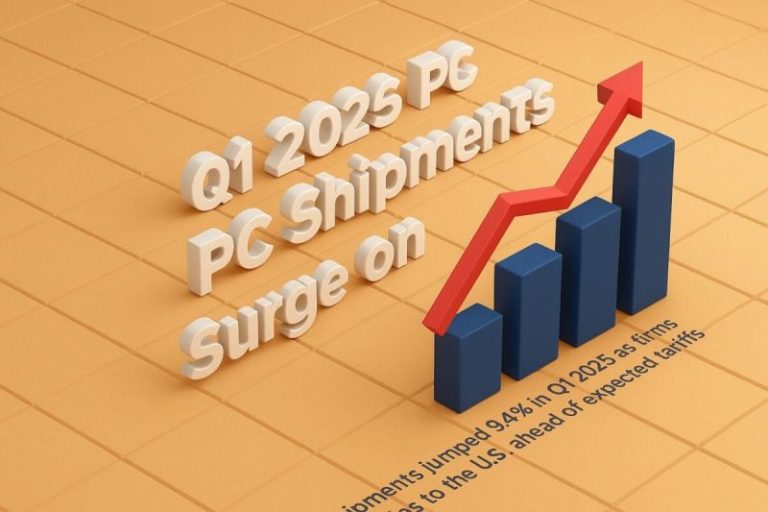
Global PC shipments rose 9.4% in Q1 2025, totaling 62.7 million units. This spike was driven by fears of new U.S. tariffs. Companies rushed deliveries to avoid increased costs.
Many manufacturers increased their shipments to the U.S. in early 2025. They feared higher import taxes due to potential tariffs. By acting early, they aimed to keep costs down and maintain profit margins.
Big players like Lenovo and HP saw strong results. Lenovo’s shipments to the U.S. jumped by 20%, while HP increased theirs by 13%. These early moves gave them an edge over competitors.
Analysts say this growth may not last. Since many shipments were front-loaded in Q1, future quarters could see weaker performance. Customers might delay purchases due to higher prices and full inventory levels.
The rise in global PC shipments may lead to a short-term oversupply. That could force companies to offer discounts in Q2 and Q3.
To reduce future risks, PC makers are changing where they build their products. Many are shifting production out of China to countries like Vietnam and Mexico. This move helps them avoid tariffs and manage costs better.
Q1 2025 saw a sharp increase in global PC shipments. While this boost came from tariff concerns, it also shows how fast companies can adapt. Moving forward, the focus will shift to long-term strategies like supply chain diversification.
Key takeaway: The PC shipments spike in early 2025 may be short-lived, but it highlights the importance of flexibility in today’s trade environment.
Related: Technology News | Global Markets
The post Q1 2025 Global PC Shipments Surge on Tariff Fears appeared first on FinanceBrokerage.
Private specialty chemicals company Maverick Metals has raised US$19 million in a seed funding round led by Olive Tree Capital to accelerate the commercialization of its flagship lixiviant technology, LithX.
Unlike traditional acid-based processes, LithX enables cost-effective, ambient temperature leaching of refractory ores like chalcopyrite, unlocking metals previously considered uneconomical or too environmentally burdensome to process.
“As the US accelerates its push for domestic critical metals production, LithX provides a scalable, commercially viable path to securing essential materials,” said Eric Herrera, co-founder and CEO of Maverick.
The US$19 million funding round includes participation from high-profile investors such as Y Combinator, Hanwha Group, Liquid 2 Ventures, Nomadic Venture Partners, Soma Capital and TechNexus Venture Collaborative.
The capital will enable the company to expand pilot deployments in collaboration with major mining companies and scale its commercialization efforts.
Global copper demand is expected to double by 2035, reaching approximately 50 million metric tons annually, driven largely by energy transition technologies, electric vehicles and infrastructure development.
But even as mining companies race to keep pace, challenges like declining ore grades, environmental restrictions and rising costs continue to limit production.
Maverick states that its proprietary lixiviant works at ambient temperatures and neutral pH levels, offering a safer, cheaper and more sustainable alternative to traditional acid leaching.
The technology enables the recovery not only of copper, but also valuable by-products such as molybdenum, gold, silver and even rare earths from a variety of unconventional sources — including tailings, smelter slag and coal fly ash.
According to Maverick, its LithX technology has demonstrated a range of benefits that could reshape the economics and the overall environmental footprint for metals processing.
For instance, the technology increases recovery rates at ambient temperatures, significantly reducing energy costs. It also eliminates the need for acid addition, offering a safer and more sustainable alternative to traditional methods.
In addition, Maverick notes that the process mitigates the risk of acid contamination and hazardous reagent exposure, enhancing worker safety — a key concern in traditional mining operations.
“We are pleased to announce our investment in and support of Maverick Metals,” said Nichola Eliovits, managing partner at Olive Tree Capital, in the company’s release. “We believe LithX has the potential to significantly increase the range of viable resources available to help alleviate global supply constraints.”
While copper remains a primary focus, LithX has shown versatility for a range of critical metals, such as high lithium extraction from spodumene and enhanced rare earths and gallium recovery from minerals like allanite and monazite.
Securities Disclosure: I, Giann Liguid, hold no direct investment interest in any company mentioned in this article.

Highlights
Value Realisation Strategy for Ecuador
Challenger Gold Limited plans to unlock the value of its Ecuador assets through several strategic options:
Focus on the Hualilan Gold project The upgraded MRE concludes Challenger Gold Limited’s exploration program in Ecuador, enabling the Company to focus entirely on advancing its flagship Hualilan Gold Project in Argentina, which features:
Monetisation of the Ecuador assets will ensure shareholders benefit directly from both value realisation in Ecuador and production growth at Hualilan.
Commenting on the resource, CEL Managing Director, Mr Kris Knauer, said
“I would like to congratulate our exploration team in Ecuador for their outstanding work in doubling project resources from 4.5Moz to 9.1Moz AuEq, including a high-grade core of 2.1Moz at 1.0g/t AuEq.
This resource update represents a transformational milestone for Challenger Gold shareholders, enabling us to move forward with unlocking significant value from our Ecuador assets while focusing entirely on bringing our flagship Hualilan project into production.
This is only the beginning for the asset – the current resource is based on drilling just five of fifteen major anomalies identified across our Ecuador projects, with all thirteen anomalies drilled so far returning significant mineralisation.’
Click here for the full ASX Release
Major offtake and funding deal to advance development and exploration activities
American West Metals Limited (American West or the Company) ( ASX: AW1) is pleased to announce that the Company has entered into a binding agreement with global metal trading and advisory group Ocean Partners Holding Ltd (OP or Ocean Partners) which will comprise an equity investment in American West as well as project development funding and copper-silver offtake to OP for the Storm Copper Project.
Dave O’Neill, American West’s Managing Director, said:
“We are very pleased to announce a strategic partnership and funding package for the Storm Copper Project which secures the long-term future of the Project. This is another significant milestone for Storm and continues to position Storm as the next potential copper mine in Canada, joining other very successful base metal mines in the region such as Polaris (22Mt @ 14.1% Zn, 4% Pb) and Nanisivik (18Mt @ 9% Zn, 0.7% Pb)
“American West’s ability to attract and partner with global companies like Ocean Partners speaks volumes to the high-quality of the Project and the management team, and emphasises the low-risk pathway to potential development.
“Ocean Partners’ existing partnerships and experience with ore-sorting and direct shipping ore (DSO) copper products are a natural fit with Storm and will help strengthen and streamline the technical aspects of the processing work flow for the PFS and beyond.
“On the back of the recently released Storm PEA, Taurus has agreed to advance the second tranche of the royalty payment. This tranche of funding will now be available immediately and demonstrates Taurus’ strong belief in the development and growth potential of Storm.
“The funding package and strategic partnership will allow American West to execute the dual strategy of aggressive exploration and streamlined development during 2025. We look forward to updating investors as the work programs are finalised and get underway.”
Brent Omland, Ocean Partners CEO, also commented:
“We are delighted to be partnering with American West on the Storm Copper Project which is rapidly emerging as a long-life, district-scale copper opportunity. Our shared goal is the timely success of the Project and we look forward to working closely with the American West team as they continue to make significant advances through process innovation and resource growth. Ocean Partners has extensive experience in marketing and trading DSO into global markets and are confident in the marketability and attractiveness of the Storm copper-silver product.”

(TheNewswire)
Silver Crown Royalties Inc. ( Cboe: SCRI, OTCQX: SLCRF, BF: QS0 ) ( ‘Silver Crown’ ‘SCRi’ the ‘Corporation’ or the ‘Company’ ) is pleased to announce the purchase of 1,000 ounces of physical silver in the spot market as part of its silver exposure strategy
Click Image To View Full Size
Click Image To View Full Size
The purchase was completed at an average price of $30.65 per ounce and reflects an 8% discount to 20-day VWAP and an 11% discount to recent highs. The average price was based on spot price of US$30.15 per ounce plus a premium of US$0.50 per ounce, for a total investment of US$30,650. The physical silver will be stored with Money Metals Depository LLC, with the exact location to be confirmed, potentially at a designated sub-custodian facility managed by the depository.
Photo Credit: MoneyMetals.com
Peter Bures, Silver Crown’s Chief Executive Officer, commented, ‘We strive to maintain an adequate working capital position of at least six months. We feel it is only prudent as a silver only royalty company to convert a portion of that cash to physical silver. SCRi’s ultimate vision is to provide a vehicle that serves as a hedge against currency devaluation, and we therefore feel it would be hypocritical to have exposure to 100% fiat money. We appreciate our investors want exposure to silver, not fiat, which they can achieve easily without our assistance. The purchase was made with a cash payment received from PPX effectively converting a cash payment to physical silver bullion delivery.’
ABOUT Silver Crown Royalties INC.
Founded by industry veterans, Silver Crown Royalties ( Cboe: SCRI | OTCQX: SLCRF | BF: QS0 ) is a publicly traded, silver royalty company. Silver Crown (SCRi) currently has four silver royalties of which three are revenue-generating. Its business model presents investors with precious metals exposure that allows for a natural hedge against currency devaluation while minimizing the negative impact of cost inflation associated with production. SCRi endeavors to minimize the economic impact on mining projects while maximizing returns for shareholders. For further information, please contact:
Silver Crown Royalties Inc.
Peter Bures, Chairman and CEO
Telephone: (416) 481-1744
Email: pbures@silvercrownroyalties.com
FORWARD-LOOKING STATEMENTS
This release contains certain ‘forward looking statements’ and certain ‘forward-looking information’ as defined under applicable Canadian and U.S. securities laws. Forward-looking statements and information can generally be identified by the use of forward-looking terminology such as ‘may’, ‘will’, ‘should’, ‘expect’, ‘intend’, ‘estimate’, ‘anticipate’, ‘believe’, ‘continue’, ‘plans’ or similar terminology. The forward-looking information contained herein is provided for the purpose of assisting readers in understanding management’s current expectations and plans relating to the future. Readers are cautioned that such information may not be appropriate for other purposes. Forward-looking statements and information include, but are not limited to, SCRi’s ultimate vision is to provide a vehicle that serves as a hedge against currency devaluation, and we therefore feel it would be hypocritical to have exposure to 100% fiat money . Forward-looking statements and information are based on forecasts of future results, estimates of amounts not yet determinable and assumptions that, while believed by management to be reasonable, are inherently subject to significant business, economic and competitive uncertainties and contingencies. Forward-looking information is subject to known and unknown risks, uncertainties and other factors that may cause the actual actions, events or results to be materially different from those expressed or implied by such forward-looking information, including but not limited to: the impact of general business and economic conditions; the absence of control over mining operations from which SCRi will purchase gold and other metals or from which it will receive royalty payments and risks related to those mining operations, including risks related to international operations, government and environmental regulation, delays in mine construction and operations, actual results of mining and current exploration activities, conclusions of economic evaluations and changes in project parameters as plans continue to be refined; accidents, equipment breakdowns, title matters, labor disputes or other unanticipated difficulties or interruptions in operations; SCRi’s ability to enter into definitive agreements and close proposed royalty transactions; the inherent uncertainties related to the valuations ascribed by SCRi to its royalty interests; problems inherent to the marketability of gold and other metals; the inherent uncertainty of production and cost estimates and the potential for unexpected costs and expenses; industry conditions, including fluctuations in the price of the primary commodities mined at such operations, fluctuations in foreign exchange rates and fluctuations in interest rates; government entities interpreting existing tax legislation or enacting new tax legislation in a way which adversely affects SCRi; stock market volatility; regulatory restrictions; liability, competition, the potential impact of epidemics, pandemics or other public health crises on SCRi’s business, operations and financial condition, loss of key employees. SCRi has attempted to identify important factors that could cause actual results to differ materially from those contained in forward-looking statements, there may be other factors that cause results not to be as anticipated, estimated or intended. There can be no assurance that such statements will prove to be accurate, as actual results and future events could differ materially from those anticipated in such statements. Accordingly, readers are advised not to place undue reliance on forward-looking statements or information. SCRi undertakes no obligation to update forward-looking information except as required by applicable law. Such forward-looking information represents management’s best judgment based on information currently available.
This document does not constitute an offer to sell, or a solicitation of an offer to buy, securities of the Company in Canada, the United States or any other jurisdiction. Any such offer to sell or solicitation of an offer to buy the securities described herein will be made only pursuant to subscription documentation between the Company and prospective purchasers. Any such offering will be made in reliance upon exemptions from the prospectus and registration requirements under applicable securities laws, pursuant to a subscription agreement to be entered into by the Company and prospective investors. There can be no assurance that forward-looking statements will prove to be accurate, as actual results and future events could differ materially from those anticipated in such statements. Accordingly, the reader is cautioned not to place undue reliance on forward-looking statements.
CBOE CANADA DOES NOT ACCEPT RESPONSIBILITY FOR THE ADEQUACY OR ACCURACY OF THIS NEWS RELEASE.
Copyright (c) 2025 TheNewswire – All rights reserved.
News Provided by TheNewsWire via QuoteMedia
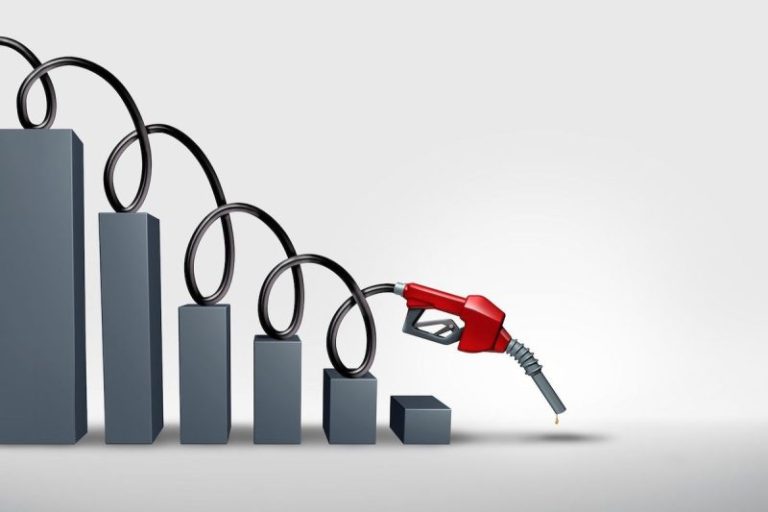
The global oil market is facing a sharp downturn as a wave of recession fears, aggressive trade policies and a surprise supply boost from OPEC+ collide to send prices tumbling to multi-year lows.
Although crude prices staged a modest recovery on Tuesday (April 8), the broader market trajectory remains grim, with Brent and West Texas Intermediate (WTI) crude now trading well below levels needed for profitable production in the US.
Oil prices have dropped precipitously since early April, reaching levels not seen since 2021 on April 4 soon after US President Donald Trump’s announcement of sweeping new tariffs on dozens of countries.
Brent and WTI remain depressed despite small upticks on Tuesday, with Brent rising 1.03 percent to reach US$64.87 per barrel, and WTI gaining 1.24 percent to hit US$61.45 per barrel.
The catalysts for the broad decline are a one-two punch of a deepening trade conflict between the US and China, and a surprise production surge from OPEC+ nations.
Trump’s tariff announcement — described by JPMorgan (NYSE:JPM) as the ‘largest tax hike on Americans since 1968’ — has rattled global markets and sent oil traders into a panic over demand destruction.
Beijing has responded with defiance, promising to fight to the end and calling Washington’s demands “blackmail.’
At the same time, OPEC+ — the alliance of major oil producers led by Saudi Arabia and Russia — announced an unexpected increase of 411,000 barrels per day in May output, compressing three months of planned supply expansion into a single move. The boost comes after months of US pressure to increase supply and push down energy prices.
But the timing could not have been worse for American producers. Analysts say the combined impact of slowing global trade and higher supply of the energy fuel has left the American oil industry vulnerable. Prices have dropped below the US$65 threshold needed to sustain profitable drilling activity across much of the US.
According to the latest Dallas Federal Reserve energy survey, even operations in the Permian Basin — the lowest-cost production zone in the country — require crude to trade above US$61 to remain economically viable.
“You’re probably seeing more pauses of initial investment intention than the initial Covid shock. It’s really bamboozling,” Rory Johnston, a veteran oil analyst and publisher of the Commodity Context newsletter, told Heatmap.
“Everything else is really, really starting to grind to a halt, and you’re not seeing anyone jumping over themselves to ‘drill, baby, drill,’ despite the White House’s claims,” Johnston added.
Equity markets have punished energy companies accordingly. Oilfield services giant Halliburton (NYSE:HAL) shed 20 percent in a single week, while Nabors Industries (NYSE:NBR) lost 30 percent in just five days.
The oil majors fared slightly better, but still saw significant losses, with ExxonMobil (NYSE:XOM) down 10 percent, Occidental Petroleum (NYSE:OXY) down 15 percent and Chevron (NYSE:CVX) falling 13 percent.
There is growing concern among market watchers that if economic activity continues to weaken under the weight of tariffs, further declines in both oil and gas demand are likely.
Crucially, many of the countries most affected by Trump’s tariffs — particularly in Southeast Asia — were previously projected to drive the bulk of oil and energy demand growth over the next decade.
Vietnam, Cambodia and four other Southeast Asian nations were hit with tariffs exceeding 45 percent, prompting concerns that their economies could stall or contract.
“The macro concern is that if these tariffs stay where they are, this is in a global recession, if not a depression-making place,” Johnston elaborated in his conversation with Heatmap. “And given that the highest tariff rates are on Asia in particular, and that’s where all growing oil demand is, it’s not good for oil.”
Meanwhile, US producers are grappling with higher costs for drilling inputs due to tariffs on steel, aluminum and other industrial goods. Johnston explained in a Bluesky post that drillers have reported a 30 percent spike in the cost of tubular steel pipe, a critical material for oil and gas wells, since Trump implemented a 25 percent steel tariff in February.
So far, OPEC+ officials have not signaled any plans to curb output again.
For now, the market remains volatile, and producers are in a state of limbo. Despite early promises of energy dominance and renewed drilling, Trump’s policy choices have left the sector reeling.
“The administration’s chaos is a disaster for the commodity markets. ‘Drill, baby, drill’ is nothing short of a myth and populist rallying cry. Tariff policy is impossible for us to predict and doesn’t have a clear goal,” one executive told the Dallas Fed last month.
Securities Disclosure: I, Giann Liguid, hold no direct investment interest in any company mentioned in this article.

Global central banks own about 17 percent of all the gold ever mined, with reserves topping 37,755 metric tons (MT) at the end of 2024. They acquired the vast majority after becoming net buyers of the metal in 2010.
Central banks purchase gold for a number of reasons: to mitigate risk, to hedge against inflation and to promote economic stability. Increased concerns over another global financial crisis have as expected led central banks once again to build up their gold reserves.
In a mid-2024 survey, the World Gold Council (WGC) said that 81 percent of the central bankers it polled expect global gold reserves to increase over the next 12 months. The precious metal’s “long-term store of value” as a guiding factor in gold purchases was cited by 42 percent of respondents.
Central banks added 1,044.6 MT of gold to their vaults in 2024, the third year in a row that gold purchases in this segment surpassed the 1,000 MT mark. In the fourth quarter of 2024 alone, central banks picked up another record 332.9 MT of gold, reported the WGC.
Yearly central bank gold purchases since 2019.
Chart via the WGC.
Twenty-nine percent of the WGC’s survey respondents indicated plans to grow their gold reserves, up 5 percent from the previous year. Three percent reported their institution is planning to decrease its gold holdings, which was unchanged from the previous year.
The WGC believes that central bank gold purchases will continue to be a major driver of gold demand in 2025.
Read on to find out the 10 top countries by central bank gold holdings, as per data from the WGC, including recent Q4 2024 and full-year 2024 reports.
Gold reserves: 8,133.46 MT
When it comes to the largest gold depository in the world, the American central bank is number one with 8,133.46 MT.
A large percentage of US gold is held in “deep storage” in Denver, Fort Knox and West Point. As the US Treasury explains, deep storage is “that portion of the US Government-owned gold bullion reserve which the Mint secures in sealed vaults that are examined annually by the Treasury Department’s Office of the Inspector General and consists primarily of gold bars.”
The rest of US-owned reserves are held as working stock, which the country’s mint uses as raw material to mint congressionally authorized coins.
Gold reserves: 3,351.53 MT
The Bundesbank, Germany’s central bank, currently owns 3,351.53 MT of gold. Like many of the central banks on this list, the German national bank stores over half of its stock in foreign locations in New York, London and France.
The Bundesbank’s foreign gold reserves came into question in 2012, when the German Federal Court of Auditors, the Bundesrechnungshof, was openly critical of the Bundesbank’s gold auditing.
In response, the German bank issued a public statement defending the security of foreign banks. Privately, the Bundesbank then began the arduous process of repatriating its gold stock back to German soil. By 2016, more than 583 MT of gold had been transferred back to Germany.
Nearly half of Germany’s gold holdings are stored in Frankfurt, while more than a third are in New York, an eighth of its holdings are in London, and a miniscule amount are held in in Paris.
The economic upheaval and geopolitical volatility brought about by US President Donald Trump’s tariff wars and adversarial posturing toward Europe led Germany to consider further repatriating its gold, reported The Telegraph in April 2025. About 1,200 metric tons of Germany’s gold holdings are stored in the vaults of the New York Federal Reserve in Manhattan.
Gold reserves: 2,451.84 MT
Banca d’Italia, the national bank of Italy, began amassing its gold in 1893, when three separate financial institutions merged into one. From there, its 78 MT slowly grew into the 2,451.84 MT the country now owns.
Like Germany, Italy stores parts of its reserves offshore. In total, 141.2 MT are located in the UK, 149.3 are in Switzerland and 1,061 are kept in the US Federal Reserve. Italy houses 1,100 MT of gold domestically.
Gold reserves: 2,437 MT
The Banque de France has 2,437 MT of gold reserves, all of which it keeps on hand. The precious metal is stored in the bank’s secure underground vault, dubbed La Souterraine, which is located 27 meters below street level.
La Souterraine’s gold vaults are one of the four designated gold depositories of the International Monetary Fund.
According to Investopedia, the collapse of the Bretton Woods gold standard system was in part due to former French President Charles de Gaulle, who “called the U.S. bluff and began actually trading dollars in for gold from the Fort Knox reserves.” At the time, US President Richard Nixon “was forced to take the U.S. off the gold standard, ending the dollar’s automatic convertibility into gold.”
Gold reserves: 2,332.74 MT*
The Bank of Russia is the official central bank of the Russian Federation and owns 2,332.74 MT of gold. Like France, Russia’s central bank has opted to store all its physical gold domestically. The Bank of Russia stores two-thirds of its gold reserves in a bank building in Moscow, and the remaining one-third in Saint Petersburg.
The majority of the yellow metal is in the form of large, variable-weight standard gold bars weighing between 10 and 14 kilograms. There are also smaller bars on site weighing as much as 1 kilogram each.
Russia, which is the second largest gold producer by country, has been a steady purchaser of the precious metal since roughly 2007, with sales ramping up significantly between 2015 and 2020. However, Russia’s refineries were banned from selling gold bullion into the London market following the country’s invasion of Ukraine. Sanctions by the west also include a freeze on about half of Russia’s gold reserves.
In early 2022, Russia tied its currency, the ruble, to the yellow metal. ‘The plan was to shift the currency away from a pegged value and into the gold standard itself so the ruble would become a credible gold substitute at a fixed rate,’ according to Robert Huish, an Associate Professor in International Development Studies at Dalhousie University.
*This figure does not reflect year-end 2024, including the at least 3.1 MT purchased in 2024, per the WGC, which is awaiting further data to update the 2024 total.
Gold reserves: 2,279.56 MT
The central bank for Mainland China is the People’s Bank of China (PBoC), located in Beijing. According to the WGC, the national financial institute stores 2,279.56 MT of gold, most which has been purchased since 2000. In 2001, the PBoC had 400 MT of gold in reserve, but in just a little more than two decades that total has climbed by 459 percent.
The PBoC issues the Panda gold coin, which was first created in 1982. The Panda coin is now one of the top five bullion coins issued by a central bank. It is among the ranks of the American Eagle, Canadian Maple Leaf, South African Krugerrand and Australian Gold Nugget.
The PBoC was one of the top gold buyers out the world’s central banks for 2024, purchasing another 44 MT of gold during the year. April 2024 marked the 18th consecutive month of gold buying for China’s central bank, which paused its purchases afterward until picking them up again in November.
Gold reserves: 1,039.94 MT
Holding the seventh largest central bank gold reserves is the Swiss National Bank. Its 1,039.94 MT of gold are owned by the state of Switzerland, but the central bank manages and maintains the reserve.
After years of opaqueness regarding the country’s golden treasure trove, the Swiss Gold Initiative, or Save our Swiss Gold campaign, was launched in 2011.
The publicity culminated in a national referendum in 2014, asking citizens to vote on three proposals. The first was a mandate for all reserve gold to be held physically in Switzerland. The other two dealt with the central bank’s ability to sell its gold reserves, along with a decree that 20 percent of the Swiss bank’s assets be held in gold.
The referendum was unsuccessful, but did prompt the bank to be more transparent. In a 2013 release, the central bank reported that 70 percent of its gold reserve was held domestically, 20 percent was located at the Bank of England and 10 percent was stored with the Bank of Canada.
Gold reserves: 876.18 MT
The Reserve Bank of India is another central bank that has fervently acted to increase its holdings in recent years. It began adding to its gold assets in 2017; however, the majority of its purchases have taken place in the past four years.
Strikingly, after India’s central bank purchased 16 MT of gold in 2023, the institution scooped up another 72 MT of the precious metal in 2024.
While more than half of its gold is held overseas in safe custody with the Bank of England and the Bank of International Settlements, about a third of its gold is held domestically. In June 2024, India repatriated 100 MT of gold from the United Kingdom. This was the first time since 1991 that the Reserve Bank of India moved its overseas gold holdings back home.
Gold reserves: 845.97 MT
Public information about the Bank of Japan’s gold reserves is hard to come by. In 2000, the island nation was holding approximately 753 MT of the yellow metal. By 2004, the Bank of Japan’s gold store had grown to 765.2 MT, and remained at that level until March 2021, when the country purchased 80.76 MT of gold.
Gold reserves: 612.45 MT
Rounding out this list of the top central bank gold reserves is the Dutch National Bank (DNB), the central bank of the Netherlands. Like Switzerland, the Dutch central bank stores as much as 38 percent of its gold in Canada’s national reserve. Another 31 percent, in the form of 15,000 gold bars, is held in a domestic vault, while the remaining 31 percent is located in New York’s Federal Reserve bank.
In a report, the DNB describes gold as the supreme safe-haven asset. “Central banks such as DNB have therefore traditionally had a lot of gold in stock. After all, gold is the ultimate nest egg: the trust anchor for the financial system,” it reads. “If the entire system collapses, the gold supply provides collateral to start over. Gold gives confidence in the strength of the central bank’s balance sheet. That gives a safe feeling.”
Gold reserves: 2,814.1 MT
The gold reserve held by the International Monetary Fund is the third largest in terms of size. The large gold reserve was amassed primarily during the founding of the international organization in 1944.
In that inaugural year, it was decided that “25 percent of initial quota subscriptions and subsequent quota increases were to be paid in gold.”
Since 1944, the International Monetary Fund has added gold through the repayment of debts owed by member countries. Nations can also exchange gold for another member country’s currency.
Securities Disclosure: I, Melissa Pistilli, hold no direct investment interest in any company mentioned in this article.

Carbonxt Group (CG1:AU) has announced Carbonxt Completes Share Purchase Plan
Download the PDF here.