Author

admin

Browsing

Continuing his administration’s push toward reducing US reliance on Chinese mineral imports, President Donald Trump has signed a new executive order to fast track processes for deep-sea mining.

The release highlights nickel, cobalt, copper, manganese, titanium and rare earths as strategic minerals key to both national security and economic prosperity, saying that deep-sea mining may provide increased access.

The April 24 announcement from Trump came a day after Secretary of the Interior Doug Burgum outlined potential plans for the government to invest in US companies that mine and process critical minerals.

Speaking at a conference put together by the Hamm Institute for American Energy, Burgum said there may be a need for “equity investment in each of these companies that’s taking on China in critical minerals.”

He discussed a multifaceted strategy that could include the creation of a sovereign wealth fund, government-backed sovereign risk insurance and a national stockpile of critical minerals.

“We should be taking some of our balance sheet and making investments,” Burgum told reporters last week. “Why wouldn’t the wealthiest country in the world have the biggest sovereign wealth fund?”

What’s at stake for the US?

These efforts to reposition America’s mineral supply chain come amid the country’s escalating trade war with China, which has tightened its grip on the global critical minerals market.

Currently, China produces or refines a dominant share of 20 key raw materials used in essential technologies — from semiconductors and electric vehicle batteries to missile guidance systems and wind turbines.

According to the US Geological Survey, the US was 100 percent reliant on imports for 15 critical minerals in 2024, and approximately 70 percent of its rare earths came from China the year before.

China’s latest retaliation — a new wave of export controls on rare earth elements in response to US tariffs — has only intensified concerns about supply chain vulnerability.

“We have to get back in the game,” Burgum urged in the same conference.

“It’s not just drill, baby, drill. It’s mine, baby, mine. If we don’t do that as a country, we will not be successful. We will literally be at the mercy of others that are controlling our supply chains.”

Building a domestic safety net for America

To offset both economic and geopolitical risks, Burgum laid out three key proposals under consideration:

  1. Sovereign wealth fund — A mechanism to allow the US to take equity stakes in domestic mining and processing firms, particularly those struggling to compete with Chinese state-backed entities.
  2. Sovereign risk insurance — A federal insurance program to reimburse companies in the event that a future administration cancels approved projects.

Burgum asserted that the three combined would put the US “in the game around critical minerals,” and said the administration is currently “working on all three.”

Opening the ocean floor to mining

Trump’s executive order directs federal agencies to expedite permitting under the Deep Seabed Hard Mineral Resources Act and the Outer Continental Shelf Lands Act. In addition to that, it instructs agencies to identify mineral-rich regions, facilitate exploration and map seabed areas for priority development.

Notably, the move bypasses the ongoing regulatory negotiations at the International Seabed Authority (ISA), a United Nations body tasked with setting global standards for ocean floor mining.

“The United States has a core national security and economic interest in maintaining leadership in deep sea science and technology and seabed mineral resources,” Trump states in the order.

Officials say US waters hold over 1 billion metric tons of seabed mineral deposits, including copper, cobalt, manganese and nickel — essential materials for renewable energy technologies and military applications.

However, the move has been met with sharp criticism from environmental groups and international regulators, which have long warned of the untested ecological risks of deep-sea mining.

“We condemn this administration’s attempt to launch this destructive industry on the high seas in the Pacific by bypassing the United Nations process,” said Greenpeace USA’s Arlo Hemphill in a statement.

“This is an insult to multilateralism and a slap in the face to all the countries and millions of people around the world who oppose this dangerous industry,’ he continues in the April 25 release.

The ISA, created under the 1982 United Nations Convention on the Law of the Sea — which the US has not ratified — has been working to establish a regulatory framework before any commercial deep-sea mining begins.

It is still deliberating rules on how to balance environmental concerns with mineral exploitation, with ISA Secretary-General Leticia Carvalho expressing hope that a global consensus can be reached by the end of 2025.

Mining companies mobilize amid US critical minerals push

Mining and energy companies are moving swiftly to capitalize on the Trump administration’s push to expand domestic production of rare earths and other critical minerals.

MP Materials (NYSE:MP), the operator of the only active rare earths mine in the US, reported a surge in interest from manufacturers after China imposed new export restrictions. The company has halted shipments of unprocessed ore to China, citing steep tariffs, and is ramping up efforts to process materials domestically.

NioCorp Developments (NASDAQ:NB) has welcomed the White House’s call to streamline permitting, which coincides with its plans to accelerate its Nebraska-based Elk Creek critical minerals project.

In the lithium space, oil giants like ExxonMobil (NYSE:XOM) and Occidental Petroleum (NYSE:OXY) are clashing over production rights in Arkansas’ Smackover Formation, one of the country’s richest potential lithium sources.

Exxon subsidiary Saltwerx recently won regulatory approval to develop a 56,000 acre lithium unit, a move it said could unlock the domestic industry and bolster US energy security.

At sea, The Metals Company (NASDAQ:TMC) is seeking permits under a decades-old US law to mine polymetallic nodules from the Pacific seabed, pointing to renewed political will.

Securities Disclosure: I, Giann Liguid, hold no direct investment interest in any company mentioned in this article.

Keep reading…Show less
This post appeared first on investingnews.com

‘Never miss out on an opportunity like a recession’ — Jack Welch, former chairman and CEO of General Electric.

US President Donald Trump’s plans to overhaul the current global trade structure through sweeping tariffs have once again ignited recession fears. With both businesses and consumers considering pulling back on spending if costs rise, many economists are forecasting a higher risk of a deep economic downturn.

Goldman Sachs’ (NYSE:GS) seesaw recession predictions on April 9 are a clear indication that much remains unclear when it comes to the possible implications for the US economy. That day, the firm forecasted a GDP loss of 1 percent in 2025 and a 65 percent probability of a recession in the next 12 months.

However, within an hour, Trump announced a 90 day pause on his reciprocal tariffs and the group returned to its previous non-recession baseline forecast, with GDP growth of 0.5 percent and a 45 percent probability of recession.

Goldman Sachs isn’t alone in its reluctance to say a recession is in the cards. During an April 14 Fox Business interview, Bank of America (NYSE:BAC) CEO Brian Moynihan said his firm does not expect to see a recession in 2025, although he acknowledged that BoA did lower its GDP forecast for the year and that continued uncertainty around tariffs could change its outlook.

However, others believe the country has already entered a recession.

“I think we’re very close, if not in, a recession now,” Blackrock (NYSE:BLK) CEO Larry Fink told CNBC during an April 11 interview. “I think you’re going to see, across the board, just a slowdown until there’s more certainty. And we now have a 90-day pause on the reciprocal tariffs — that means longer, more elevated uncertainty.”

So — are we in a recession? Even though nailing down an answer is tricky, investors educate themselves on what a recession is, how long they last and what strategies may work well during these difficult economic periods.

In this article

    What is a recession?

    When a country’s economic activity experiences a serious and persistent decline over an extended period, often over two consecutive quarters, economists often call it a recession. Recessions involve a broad array of economic sectors, not just a decline among one or two industries.

    Some of the key indicators of a recession include rising unemployment levels, negative GDP, stock market selloffs and falling manufacturing data, as well as declining consumer confidence as evidenced by dropping retail sales.

    Answering the question of whether we’re in a recession is difficult because so many factors are at play — while one expert might weigh GDP declines heavily in their analysis, another might feel other elements are more important.

    Watch the video from mid-2023 below to get a sense of why getting a consensus on whether we’re in a recession can be tough.

    Experts Rick Rule, Adrian Day and Mike Larson explain why it’s hard to get an answer on whether the US is in a recession.

    What causes a recession?

    Forbes lists a number of catalysts that can spark a recession: sudden economic shock, excessive debt (think the US mortgage debt crisis that fueled the Great Recession in 2008), asset bubbles, uncontrolled inflation (which leads central banks to raise interest rates, making it more expensive to do business or pay down debts), runaway deflation and technological changes. Tariffs have also historically been linked with recession.

    How can tariffs cause a recession?

    Tariffs can cause a recession through a domino effect of increased costs, supply chain disruptions, inflationary pressures and investment uncertainty — all of which can bring about massive layoffs in critical sectors of the economy.

    Economic historians, such as Dr. Phillip Magness of the Independent Institute, have pointed to the worsening of the Great Depression following the passing of the Smoot-Hawley Tariff Act of 1930 as offering a potent warning about the potential outcome of the sweeping tariffs being enacted under US President Trump.

    Watch the video below to learn more about the potential for tariffs to spark a recession and why investors are looking to gold for safety.

    Magness said there’s still a chance to avoid a recession if Trump reverses course on his tariff policy.

    Are there signs before a recession?

    What are the telltale signs that warn of a recession in advance? Much like accurately forecasting the weather, making any sort of economic forecast is difficult. But there are certain signals economists look out for.

    Aside from the previously mentioned slumping GDP and falling copper prices, one of the most prominent harbingers of a looming recession is an inverted bond yield curve.

    “The bond market can help predict the direction of the economy and can be useful in crafting your investment strategy,” Investopedia states. “This metric — while not a guarantee of future economic behavior — has a strong track record.”

    In addition, declining unemployment figures, shrinking industrial output, falling retail sales and dramatic stock market selloffs are often considered classic indicators of a potential recession.

    Will there be a recession in 2025?

    Forecasting recessions can be tricky. There are extenuating circumstances that may allow for a reversal of fortunes before a deeper recession takes hold, but in the meantime many historical recession signals are currently flashing red.

    Newsweek has cited a number of US economists who identified five critical recession indicators on display, including declining consumer confidence, increasing credit card late payments and defaults, higher business and trade policy uncertainty, and rising inflation expectations.

    ‘The layoff cycle is indeed accelerating into 2025,’ she said. ‘The biggest determination of prices (for goods and services) that can or cannot be paid is what your paycheck is. What we’re seeing is average weekly earnings have stagnated starting in December, and have begun to fall on an inflation adjusted basis.’

    DiMartino Booth sees the central bank potentially cutting rates four to five times in 2025.

    Is Warren Buffett predicting a recession?

    Warren Buffett is not known for his direct forecasts. In fact, he’s likely to say, “Nothing is sure tomorrow, nothing is sure next year and nothing is ever sure, either in markets or in business forecasts, or in anything else.” For that reason, his investment decisions are often read like tea leaves by market watchers looking for signs on where to invest.

    So when the Oracle of Omaha called tariffs ‘an act of war to some degree’ during a March 2025 CBS interview, it was not a good sign. Market watchers will certainly be on the lookout for new clues when Buffet speaks to shareholders at Berkshire Hathaway’s (NYSE:BRK.A,NYSE:BRK.B) annual meeting in May.

    Another move by Buffett that’s being interpreted as a recession signal? Berkshire Hathaway’s decision to sell off of US$134 billion in equity positions in 2024 in order to beef up its cash holdings, which came in at a record US334 billion as of March 2025.

    How long do recessions last?

    Recessions are considered a part of the normal expansions and contractions of the business cycle.

    While not as catastrophic as depressions, recessions can last for several months and even years, with significant consequences for governments, companies, workers and investors. Each of the four global recessions since World War II lasted about one year.

    That said, there have been a few short-lived recessions in the US, including the 2020 pandemic recession. Stock markets around the world crashed at the onset of the COVID-19 outbreak. A record 20.5 million jobs were lost in the US alone in April 2020 as the nation’s unemployment rate reached 14.7 percent.

    The Fed responded by cutting interest rates, and the US federal government issued trillions of dollars in financial aid to laid-off workers and impacted businesses. By October 2020, US GDP was up 33.1 percent, marking an end to the recession.

    What sectors are hardest hit by a recession?

    Businesses often tighten their belts during recessions by postponing expansion plans, reducing worker hours and benefits or laying off employees. Those same workers are the consumers who play a vital role in the strength of a nation’s economic activity.

    With less disposable income, consumers stop spending on large appliances, vehicles, new homes, evenings out and vacations. The focus shifts to low-priced necessities, food and medical needs. Declining consumer spending and demand for goods and services pushes the economy into a deeper recession, resulting in more layoffs and rising unemployment. Small- and medium-sized business owners may even find themselves unable to operate entirely.

    Typically, retail, manufacturing, restaurants, technology, travel and entertainment are hit the hardest during a recession. The real estate and mortgage lending sectors may also feel the pain.

    As the recession worsens, some homeowners may not be able to pay their mortgages and could face defaults, which can bring further downward pressure on real estate prices. Those still shopping for a home or new car may find that banks have instituted much tighter lending policies on mortgages and car loans.

    Meanwhile, investors can lose money as their stock holdings and real estate assets lose their value. Retirement savings accounts linked to the stock market can also suffer.

    All of these forces can contribute to a deflationary environment that leads central banks to cut interest rates in an effort to stimulate the economy out of a recession.

    How to prepare for a recession?

    There is no perfect answer for how to invest during a recession, and no stock remains recession-proof. But for those who know how to practice due diligence through fundamental analysis, recessions do offer an opportunity to pick quality stocks at a discount.

    “The stock market is the only store where when things go on sale, everyone runs out the door. You don’t want to be one of those people,” said Shawn Cruz, head trading strategist at TD Ameritrade. “So if you have a long term focus and some specific names you’re looking at, this is a good time to pick up some quality shares for your portfolio.”

    It’s better to look at well-established publicly traded companies with strong balance sheets and minimal debt that still have the ability to generate cash and pay dividends. Companies to avoid include those with high debt loads and little cashflow, as they have a difficult time managing operating costs and debt payments during recessions.

    Danielle DiMartino Booth advises investors to watch the data closely if they want to stay ahead of the curve, particularly payroll levels, layoff announcements, bankruptcies and store closures.

    Industry matters, too. As mentioned, real estate, retail, manufacturing, restaurants, technology, travel and entertainment are hit the hardest during a recession. On the other hand, stocks in the consumer staples (food and beverage, household goods, alcohol and tobacco) and healthcare (biotech and pharmaceutical) sectors tend to do well in recessionary environments.

    Inventors can further mitigate the risks that a recession brings by building a diversified portfolio that considers stocks across varying sectors and geographic regions. Rather than investing in individual stocks, exchange-traded funds with low management fees are another way to spread risk. The Vanguard Consumer Staples ETF (ARCA:VDC) and the Consumer Staples Select Sector SPDR Fund (ARCA:XLP) are two examples to consider.

    Should I wait to invest until after a recession?

    This question brings us back to the quote from General Electric’s Welch that’s cited at the beginning of this article. For long-term investors who understand the popular adage, “buy low, sell high,” a recession and its impact on share prices offers up those ‘buy low’ opportunities. That’s because all things come to an end, even recessions, and when that happens those who bought the dip will be well positioned to benefit from the rebound.

    That said, due diligence never goes out of style. Not all companies will make it through a market downturn unscathed. To truly see returns from this investment strategy it’s critical to look for companies with strong balance sheets, experienced management and a history of performing well in bear markets. Opting for revenue-generating and dividend-paying stocks over growth stocks during a recession is another smart play.

    Overall, experts advise that it’s not necessary to avoid investing during a recession.

    “While (recessions) can be challenging for returns and growing wealth, we also see countercyclical rallies and the market is always forward-looking, so the keys are to remain fully invested, not be whipsawed by short-term market gyrations and to keep (focused) on your long-term goals,” Rajesh Nakadi, head of investments of the Global Family Office at BNY Mellon Wealth Management, told Forbes.

    Danielle DiMartino Booth advises investors to focus on companies’ ability to maintain dividends and cash flow during this period, meaning defensive plays that pay dividends and are able to increase their payrolls are a worth a look.

    What assets can hold their value in a deep recession?

    For long-term investors looking to ride out the worst recessions, stocks and high-yield bonds are best avoided. Safer assets that have historically performed well during recessions include government bonds, managed futures, gold and cash.

    It should be noted that while 10 year US Treasury bonds have an excellent reputation as a reliable safe haven asset, nothing is without risk. In early April 2025, following another round of tariffs announced by Trump, an unprecedented number of sellers, including foreign governments, ditched their US bond holdings, resulting in rising bond yields. Although yields fell a few days later, uncertainty in the bond market remains.

    “There is clearly still a lot of concern over this highly unusual rise in Treasury yields at a time of equity market weakness and global concern over recession,” said Douglas Porter, chief economist at Bank of Montreal. “Notably, the backup in yields was mostly driven by rising real yields and not higher inflation premiums … indicating a more fundamental drop in demand.”

    If you’ve parked your dollars in actual dollars, i.e. cash, instead of the stock market or bonds, the value is not being erased by declining stock prices. The ‘cash is king’ mantra speaks to the importance of keeping liquid assets on hand during a recession.

    Along that same vein, gold has earned its safe-haven status because it is a physical asset that holds its value and can be easily liquidated.

    One last thought — don’t move all your wealth into gold or cash. A diversified portfolio is still the best hedge against a recession.

    Which stocks do well after a recession?

    Once the economy is in the recovery stage and consumer confidence begins to improve, the best performing stocks in the market tend to be tied to the technology, financial, consumer discretionary, industrial, material and energy sectors.

    The consumer discretionary (i.e. cars and appliances), material and industrial segments “are known as cyclicals, because they are closely tied to the fortunes of the economy,” the Royal Bank of Canada (TSX:RY,NYSE:RY) states. The bank explains that once demand improves, manufacturers will begin using up their inventory and will in turn “need to order metal, chemicals and other materials to create more goods to sell.”

    Securities Disclosure: I, Melissa Pistilli, hold no direct investment interest in any company mentioned in this article.

    Keep reading…Show less
    This post appeared first on investingnews.com

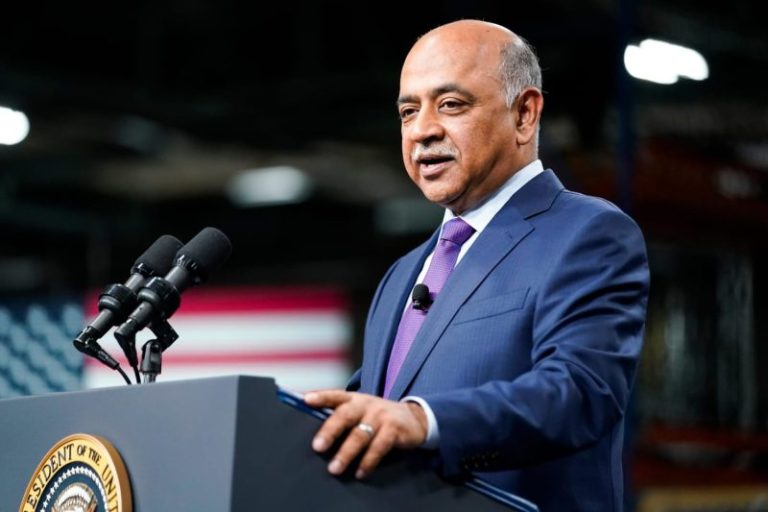
    International Business Machines Corporation on Monday announced it will invest $150 billion in the U.S. over the next five years, including more than $30 billion to advance American manufacturing of its mainframe and quantum computers.

    “We have been focused on American jobs and manufacturing since our founding 114 years ago, and with this investment and manufacturing commitment we are ensuring that IBM remains the epicenter of the world’s most advanced computing and AI capabilities,” IBM CEO Arvind Krishna said in a release.   

    The company’s announcement comes weeks after President Donald Trump unveiled a far-reaching and aggressive “reciprocal” tariff policy to boost manufacturing in the U.S. As of late April, Trump has exempted chips, as well as smartphones, computers, and other tech devices and components, from the tariffs.

    IBM said its investment will help accelerate America’s role as a global leader in computing and fuel the economy. The company said it operates the “world’s largest fleet of quantum computer systems,” and will continue to build and assemble them in the U.S., according to the release.

    IBM competitor Nvidia, the chipmaker that has been the primary benefactor of the artificial intelligence boom, announced a similar push earlier this month to produce its NVIDIA AI supercomputers entirely in the U.S. 

    Nvidia plans to produce up to $500 billion of AI infrastructure in the U.S. via its manufacturing partnerships over the next four years.

    Last week, IBM reported better-than-expected first-quarter results. The company said it generated $14.54 billion in revenue for the period, above the $14.4 billion expected by analysts. IBM’s net income narrowed to $1.06 billion, or $1.12 per share, from $1.61 billion, or $1.72 per share, in the same quarter a year ago.

    IBM’s infrastructure division, which includes mainframe computers, posted $2.89 billion in revenue for the quarter, beating expectations of $2.76 billion.

    The company announced a new z17 AI mainframe earlier this month.

    CNBC’s Jordan Novet contributed to this report.

    This post appeared first on NBC NEWS

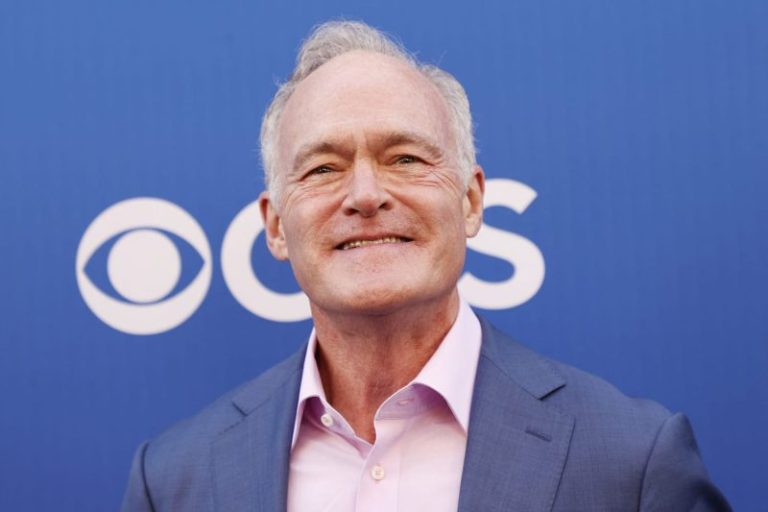
    “60 Minutes” correspondent Scott Pelley paid tribute Sunday to Bill Owens, the show’s executive producer who resigned last week, saying on the air that “none of us is happy” about the extra supervision that corporate leaders are imposing.

    Pelley made his comments at the end of the evening’s CBS News telecast, saying that in quitting, Owens proved he was the right person for the job.

    “It was hard on him and it was hard on us,” Pelley said. “But he did it for us — and you.”

    His on-air statement was an unusual peek behind the scenes at the sort of inner turmoil that viewers seldom get the opportunity to see.

    Owens, only the third top executive in the 57-year history of television’s most influential newscast, resigned last week, saying he no longer felt he had the independence to run the program as he had in the past, and felt necessary.

    CBS News’ parent company, Paramount Global, is in the midst of a merger with Skydance Media that needs the approval of the Trump administration. Trump has sued “60 Minutes” for $20 billion, saying it unfairly edited a Kamala Harris interview last fall to her advantage. Owens and others at “60 Minutes” believe they did nothing wrong and have opposed a settlement.

    As a result, Pelley explained to viewers on Sunday, Paramount has begun to supervise “60 Minutes” stories in new ways. Former CBS News President Susan Zirinsky, a longtime news producer, has reportedly been asked to look at the show’s stories before they air.

    “None of our stories has been blocked,” Pelley said. “But Bill felt he lost the independence that honest journalism requires. No one here is happy about it. But in resigning, Bill proved he was the right person to lead ‘60 Minutes’ all along.”

    Despite this, “60 Minutes” has done tough stories about the Trump administration almost every week since the inauguration in January, many of them reported by Pelley. On Sunday, “60 Minutes” correspondent Sharyn Alfonsi had the latest, interviewing scientists about cutbacks at the National Institutes for Health.

    Trump was particularly angered by the show’s telecast two weeks ago, saying on social media that CBS News should “pay a big price” for going after him.

    This post appeared first on NBC NEWS

    The American economy may be heading toward stagflation, an environment characterized by high inflation, slowing growth and rising unemployment, US Federal Reserve Chair Jerome Powell cautioned earlier this month.

    ‘Unemployment is likely to go up as the economy slows in all likelihood, and inflation is likely to go up as tariffs find their way and some part of those tariffs come to be paid by the public,’ Powell said during an April 15 appearance in Chicago.

    While he was careful not to use the word ‘stagflation,’ experts have pointed out that the circumstances Powell outlined correspond with its definition, thrusting the term back into public discourse.

    But what exactly is stagflation, and why is it such a concern for investors? Read on to find out.

    What is stagflation?

    Stagflation describes the economic scenario where inflation remains high even as economic growth slows and unemployment rises. Stagflation is a rare occurrence, and contradicts the foundational economic belief that inflation typically rises during economic booms and falls during recessions.

    The term was coined by British politician Iain Macleod in 1965 and became infamous during the 1970s oil crisis, when a dramatic spike in oil prices triggered both rising costs and shrinking output across much of the global economy.

    In simple terms, stagflation means you’re paying more for everything while earning less; at the same time, finding a new job, or even keeping your current one, becomes more difficult.

    The misery index, created to measure such bleak periods, adds the unemployment rate to the inflation rate. During the worst of the 1970s, it exceeded 20. As of March 25, 2025, it stood at around 6.6, with inflation at 2.4 percent and unemployment at 4.2 percent. Many economists fear that number could rise quickly if current trends continue.

    Why are experts sounding the alarm on stagflation?

    A combination of geopolitical shocks, fragile supply chains and new economic policies — particularly a sweeping series of tariffs enacted by the Trump administration — has created a perfect storm, economists say.

    The tariffs include a 10 percent universal tax on all imports, up to 25 percent duties on goods from Canada and Mexico and a staggering 245 percent tariff on imports from China. These are not minor adjustments — they are foundational changes to the pricing structure of the US consumer and business marketplace.

    ‘The level of the tariff increases announced so far is significantly larger than anticipated,’ Powell said in a written statement from his Chicago appearance that was published on April 16. ‘The same is likely to be true of the economic effects, which will include higher inflation and slower growth.’

    In other words, the tariffs act as a supply shock: They make it more expensive to bring goods into the country, which businesses pass on to consumers through price hikes. At the same time, higher costs can lead companies to cut back on investment and hiring, slowing the economy and increasing job losses.

    “The Trump White House tariff policy has certainly increased the risk of both higher inflation and lower growth,” Brett House, professor of professional practice in economics at Columbia Business School, told CNBC.

    To better understand what’s at stake, economists are looking at the 1970s — a decade that was marked by an oil embargo, skyrocketing prices and stagnant economic activity.

    In response, then-Fed Chair Paul Volcker aggressively hiked interest rates, with the federal funds rate peaking at nearly 21 percent in 1981. The move ultimately tamed inflation, but plunged the country into two recessions.

    That painful cure became the playbook for handling runaway prices, with central banks committing to maintaining credibility and acting decisively, even at the cost of job losses.

    “The Fed’s credibility in keeping inflation low and stable, won over decades, kept longer-term inflation expectations stable,” Fed Governor Adriana D. Kugler said in a recent statement.

    Still, today’s economic landscape differs from the 1970s in critical ways. The US is no longer as dependent on foreign oil. And labor unions, once a powerful driver of wage spirals, now represent a smaller portion of the workforce.

    However, these differences might not offer much protection. While oil prices are less of a concern today, tariff-induced uncertainty could have a similar chilling effect.

    How does stagflation impact everyday life?

    For most people, stagflation translates into economic whiplash.

    Essentially, prices go up, wages don’t keep pace and job security becomes tenuous. According to Forbes, a rising misery index would create a whole new roster of challenges for the everyday person.

    To illustrate, people will likely have to spend more to get the same quantity of food, clothes and gas. Employees’ chances of getting laid off or working fewer hours will increase. For recent college graduates, the job market could become especially brutal. For families, the cost of borrowing — whether to buy a home, finance a car or use a credit card — could rise steeply if the Fed chooses to raise interest rates to combat inflation.

    Diane Swonk, chief economist at KPMG, described today’s environment as having a “whiff of stagflation,” where people feel less secure about their financial future, even if the economic statistics haven’t fully caught up to the sentiment.

    Is stagflation a certainty?

    Not all economists agree that stagflation is inevitable, or that it will reach the same severity as in the 1970s.

    Still, concerns are growing. Michael Feroli, JPMorgan Chase & Co.’s (NYSE:JPM) chief US economist, issued a warning earlier this month, stating the bank now expects a recession in 2025.

    He predicts unemployment will rise to 5.3 percent, while a core measure of inflation will reach 4.4 percent, which he described as a “stagflationary forecast.”

    KPMG also projects a shallow recession, with inflation peaking at the end of the third quarter. But even a modest downturn could be painful for vulnerable workers and households already stretched thin by pandemic-era economic disruptions and the fading buffer of savings built up during that time.

    What does stagflation mean for investors?

    Stagflation presents a complex and often discouraging landscape for investors.

    Unlike recessions, where bonds tend to do well as interest rates fall, stagflation often erodes the value of both stocks and bonds. In such periods, equities can suffer from declining corporate profits due to rising input costs, as well as weakening consumer demand, creating varied headwinds for the stock market.

    At the same time, high inflation erodes the real value of future earnings, often leading to downward pressure on stock prices, particularly for growth-oriented companies whose valuations depend heavily on projected future cashflow.

    Bonds, too, become vulnerable. Inflation eats into the fixed income stream provided by bonds, especially longer-term bonds. As inflation rises, the purchasing power of interest payments declines, and yields on newly issued bonds increase to compensate investors, driving down the market value of existing lower-yield bonds.

    This was evident during the 1970s, the last prolonged period of US stagflation. At that time, both the S&P 500 (INDEXSP:.INX) and US treasuries experienced prolonged periods of underperformance in real terms.

    Gold, on the other hand, surged in value as investors sought assets that could maintain their purchasing power amid inflation and economic uncertainty. The price of gold increased more than 1,000 percent from 1971 to 1980, reflecting its appeal as a hedge during economic stress. Commodities more broadly — such as oil, agricultural products and industrial metals — have historically performed better in stagflationary conditions.

    Since commodities prices are a direct input into inflation measures, they tend to rise during inflationary periods, particularly when inflation is driven by supply shocks. For instance, in the 1970s, oil prices quadrupled following the OPEC embargo, delivering significant gains for energy producers and commodity-focused investors.

    Still, it’s worth noting that no single asset or strategy is immune to the pressures of stagflation. While diversification, inflation hedging and a focus on quality assets are time-tested approaches, the unique combination of rising prices and faltering growth challenges even seasoned investors.

    Investor takeaway

    Stagflation is not just an economic term from the past — it may soon be a lived reality for millions and even billions.

    With tariffs reshaping trade dynamics in real time, inflation hovering stubbornly above the Fed’s target and job growth showing signs of slowing, the conditions are set for a troubling period ahead.

    Whether or not future policymaking can steer the economy away from this outcome remains to be seen. For now, consumers, businesses and investors alike would do well to prepare for the reality that stagflation brings — not just a historical anomaly, but a modern economic threat.

    Securities Disclosure: I, Giann Liguid, hold no direct investment interest in any company mentioned in this article.

    Keep reading…Show less
    This post appeared first on investingnews.com

    Nutritional Growth Solutions Limited (ASX:NGS) (‘NGS’ or ‘the Company’), is pleased to announce that it has received binding commitments for the issue of 1,000,000 convertible notes (Placement CNs), to be issued at $1.00 each (CN Placement).

    HIGHLIGHTS

    • NGS has secured commitments of A$1.0 million under a placement of convertible notes.
    • Each investor who is issued with ordinary shares on conversion of the convertible notes will be issued with one option for each fully paid ordinary share that is issued on conversion of the convertible notes, with that issuance of options to take place on the same date as the ordinary share issuance date. This is expected to be within 10 business days of NGS shareholders approving that issuance of options including for the purposes of ASX Listing Rule 7.1. These options will be exercisable on a 1:1 basis into fully paid ordinary shares in NGS at an exercise price of $0.04 per option, and will expire 3 years following their issue date if they have not been exercised during that 3 year period.
    • The placement of convertible notes was supported by Australian sophisticated and professional investors.
    • Funds raised from the placement of convertible notes will be used to purchase inventory for retail expansion in CVS and Wakefern, as well as working capital and corporate expenses.

    The offer of the Placement CNs was made to sophisticated and professional investors in Australia and successfully closed, achieving binding commitments of A$1.0 million.

    Stephen Turner, NGS CEO and Managing Director, commented on the CN Placement:

    “We are very pleased with the strong support shown by investors in this placement, which provides important growth capital to support our retail expansion into leading U.S. retailers, including CVS and Wakefern. We would like to thank our shareholders for their ongoing support as we execute our growth strategy and build on the momentum from our recent distribution achievements.”

    The conversion of the convertible notes into fully paid ordinary shares in NGS will take place at a price of between A$0.03 and A$0.025 per ordinary share within 10 business days of NGS shareholders approving their conversion including for the purposes of ASX Listing Rule 7.1. NGS expects to convene a general meeting of its shareholders to consider whether to approve the conversion of the convertible notes into fully paid ordinary shares in NGS and whether to approve the issuance of options within the next few weeks.

    Until the convertible notes are converted into ordinary shares or redeemed, they bear interest which is payable quarterly in arrear at either 10% per annum (if the holder of the convertible notes elects not to receive ordinary shares in NGS in lieu of cash interest), or 15% per annum (if the holder of the convertible notes elects to receive ordinary shares in NGS in lieu of cash interest). Issuance of ordinary shares in NGS in lieu of cash interest is subject to NGS being in compliance with the ASX Listing Rules. If the convertible notes have not been converted by the date that is 2 years after their issue date, they will be redeemed by NGS at their issue price.

    Each investor who is issued with ordinary shares on conversion of the convertible notes will be issued with one option for each fully paid ordinary share that is issued on conversion of the convertible notes, with that issuance of options to take place on the same date as the ordinary share issuance date. This is expected to be within 10 business days of NGS shareholders approving that issuance of options including for the purposes of ASX Listing Rule 7.1. These options will be exercisable on a 1:1 basis into fully paid ordinary shares in NGS at an exercise price of $0.04 per option, and will expire 3 years following their issue date if they have not been exercised during that 3 year period (the CN Holder Options). Quotation of the CN Holder Options on the ASX will be sought.

    USE OF PROCEEDS

    The net proceeds from the issue of the convertible notes are planned to be used in the following areas:

    LEAD MANAGER OPTIONS

    The Company engaged GBA Capital Pty Ltd (AFSL 544680) to act as lead manager for the CN Placement (Lead Manager).

    Under the terms of the mandate with the Lead Manager, the Lead Manager will be issued with 30% of the number of CN Holder Options (the Lead Manager Options). The Lead Manager Options will be exercisable on a 1:1 basis into fully paid ordinary shares in NGS at an exercise price of $0.04 per Lead Manager Option. The Lead Manager Options will expire 3 years following their issue date if they have not been exercised during that 3 year period.

    The Lead Manager Options will be issued within 10 business days of NGS shareholders approving that issuance including for the purposes of ASX Listing Rule 7.1. NGS expects the Lead Manager Options to be issued at the same time as the issuance of the CN Holder Options. Quotation of the Lead Manager Options on the ASX will be sought.

    Click here for the full ASX Release

    This post appeared first on investingnews.com

    (TheNewswire)

    Silver Crown Royalties Inc. ( Cboe: SCRI, OTCQX: SLCRF, BF: QS0 ) ( ‘Silver Crown’ ‘SCRi’ the ‘Corporation’ or the ‘Company’ ) is pleased to announce that the Company has successfully closed the third and final tranche (‘ Final Tranche ‘) of its non-brokered offering of units ( ‘Units’ ) that was previously announced on February 6, 2025 (the ‘Offering’ ) and issued 89,400 Units at a price of C$6.50 per Unit, for gross proceeds of approximately C$581,100

    Each Unit consists of one common share ( ‘Common Share’ ) and one Common Share purchase warrant ( ‘Warrant’ ), with each Warrant exercisable to acquire one additional Common Share at an exercise price of C$13.00 for a period of three years from the closing date. A total of 232,248 Units were issued in accordance with the Offering for cumulative gross proceeds of C$1,509,615.

    The proceeds from the Final Tranche will be used to partially fund the second tranche of the Company’s silver royalty acquisition on the Igor 4 project in Peru, as well as general and administrative expenses. All securities issued are subject to a statutory hold period of four months plus one day from the date of issuance, in accordance with applicable securities legislation. The closing was subject to customary conditions, including the approval of Cboe Canada Inc.

    Regarding the receipt of payments from the Company’s producing royalties, Silver Crown expects to receive cash payments equivalent to approximately 6,703 ounces of silver in the first quarter of 2025. This is driven by the early payment of the PPX/Igor 4 royalty as well as payments under the Elk Gold Royalty.

    ABOUT Silver Crown Royalties INC.

    Founded by industry veterans, Silver Crown Royalties ( Cboe: SCRI | OTCQX: SLCRF | BF: QS0 ) is a publicly traded, silver royalty company. Silver Crown (SCRi) currently has four silver royalties of which three are revenue-generating. Its business model presents investors with precious metals exposure that allows for a natural hedge against currency devaluation while minimizing the negative impact of cost inflation associated with production. SCRi endeavors to minimize the economic impact on mining projects while maximizing returns for shareholders. For further information, please contact:

    Silver Crown Royalties Inc.

    Peter Bures, Chairman and CEO

    Telephone: (416) 481-1744

    Email: pbures@silvercrownroyalties.com

    FORWARD-LOOKING STATEMENTS

    This release contains certain ‘forward looking statements’ and certain ‘forward-looking information’ as defined under applicable Canadian and U.S. securities laws. Forward-looking statements and information can generally be identified by the use of forward-looking terminology such as ‘may’, ‘will’, ‘should’, ‘expect’, ‘intend’, ‘estimate’, ‘anticipate’, ‘believe’, ‘continue’, ‘plans’ or similar terminology. The forward-looking information contained herein is provided for the purpose of assisting readers in understanding management’s current expectations and plans relating to the future. Readers are cautioned that such information may not be appropriate for other purposes. Forward-looking statements and information include, but are not limited to, the proceeds from the Final Tranche will be used to partially fund the second tranche of the Company’s silver royalty acquisition on the Igor 4 project in Peru, as well as general and administrative expenses. Forward-looking statements and information are based on forecasts of future results, estimates of amounts not yet determinable and assumptions that, while believed by management to be reasonable, are inherently subject to significant business, economic and competitive uncertainties and contingencies. Forward-looking information is subject to known and unknown risks, uncertainties and other factors that may cause the actual actions, events or results to be materially different from those expressed or implied by such forward-looking information, including but not limited to: the impact of general business and economic conditions; the absence of control over mining operations from which SCRi will purchase gold and other metals or from which it will receive royalty payments and risks related to those mining operations, including risks related to international operations, government and environmental regulation, delays in mine construction and operations, actual results of mining and current exploration activities, conclusions of economic evaluations and changes in project parameters as plans continue to be refined; accidents, equipment breakdowns, title matters, labor disputes or other unanticipated difficulties or interruptions in operations; SCRi’s ability to enter into definitive agreements and close proposed royalty transactions; the inherent uncertainties related to the valuations ascribed by SCRi to its royalty interests; problems inherent to the marketability of gold and other metals; the inherent uncertainty of production and cost estimates and the potential for unexpected costs and expenses; industry conditions, including fluctuations in the price of the primary commodities mined at such operations, fluctuations in foreign exchange rates and fluctuations in interest rates; government entities interpreting existing tax legislation or enacting new tax legislation in a way which adversely affects SCRi; stock market volatility; regulatory restrictions; liability, competition, the potential impact of epidemics, pandemics or other public health crises on SCRi’s business, operations and financial condition, loss of key employees. SCRi has attempted to identify important factors that could cause actual results to differ materially from those contained in forward-looking statements, there may be other factors that cause results not to be as anticipated, estimated or intended. There can be no assurance that such statements will prove to be accurate, as actual results and future events could differ materially from those anticipated in such statements. Accordingly, readers are advised not to place undue reliance on forward-looking statements or information. SCRi undertakes no obligation to update forward-looking information except as required by applicable law. Such forward-looking information represents management’s best judgment based on information currently available.

    This document does not constitute an offer to sell, or a solicitation of an offer to buy, securities of the Company in Canada, the United States or any other jurisdiction. Any such offer to sell or solicitation of an offer to buy the securities described herein will be made only pursuant to subscription documentation between the Company and prospective purchasers. Any such offering will be made in reliance upon exemptions from the prospectus and registration requirements under applicable securities laws, pursuant to a subscription agreement to be entered into by the Company and prospective investors. There can be no assurance that forward-looking statements will prove to be accurate, as actual results and future events could differ materially from those anticipated in such statements. Accordingly, the reader is cautioned not to place undue reliance on forward-looking statements.

    CBOE CANADA DOES NOT ACCEPT RESPONSIBILITY FOR THE ADEQUACY OR ACCURACY OF THIS NEWS RELEASE.

    Copyright (c) 2025 TheNewswire – All rights reserved.

    News Provided by TheNewsWire via QuoteMedia

    This post appeared first on investingnews.com

    This week brought major developments in the tech space as interest rate speculation impacted the market and Alphabet (NASDAQ:GOOGL) saw developments in its high-stakes antitrust battle.

    Meanwhile, Motorola Solutions (NYSE:MSI) made waves with new artificial intelligence (AI) integrations, and earnings reports impacted shares of Tesla (NASDAQ:TSLA), IBM (NYSE:IBM) and Intel (NASDAQ:INTC).

    Meanwhile, the EU continued its regulatory push against Apple (NASDAQ:APPL) and Meta Platforms (NASDAQ:META).

    Read on to dive deeper into this week’s top stories.

    1. DOJ pushes for radical remedies in Google’s antitrust trial

    This week, federal attorneys presented possible remedies before Judge Amit Mehta in the Google search antitrust case, following his August 2024 ruling that Google is illegally monopolizing the search market.

    The US Department of Justice (DOJ) recommended that Google be forced to share its user data with rivals and advocated for the sale of Google’s Chrome business, arguing that the divestiture would give other companies a fighting chance in the search engine market. As the week progressed, executives from OpenAI, DuckDuckGo, Perplexity and Yahoo said they would consider acquiring Chrome if Mehta were to force a sale.

    “Google can compete, but they simply don’t want to compete on a level playing field,” DOJ attorney David Dahlquist said during his opening remarks on Monday (April 21). He added, “Google is now fearful of competing against rivals who will only get stronger with the proposed remedies in place.” Dahlquist also called for forward-looking remedies that would prevent future monopolization in the burgeoning field of AI-powered search and related AI services, proposing that Google be banned from making deals with phone manufacturers that make Google Search the default search.

    Google’s attorney, John Schmidtlein, said the proposal is “fundamentally flawed” and argued that it is a “wishlist” for competitors that would immediately benefit from technology that Google has spent years developing.

    In a blog post on Sunday (April 20), Lee-Anne Mulholland, Google’s vice president of regulatory affairs, wrote, “At trial, we will show how DOJ’s unprecedented proposals go miles beyond the Court’s decision, and would hurt America’s consumers, economy, and technological leadership.” Mulholland contends that the DOJ’s antitrust proposals would hinder user access to preferred services, raise costs, slow innovation, jeopardize privacy, impede AI development and undermine the functionality and security of key platforms like Chrome and Android.

    Illustrating the challenge that Google’s competitors face, Dmitry Shevelenko, head of product for Perplexity AI, said that on on Android devices, the process of setting Perplexity AI as the default AI assistant over Google’s pre-set Gemini is like navigating a “jungle gym.’ However, he also expressed concern that forcing Google to sell Chrome to a competitor, like OpenAI, could lead to the discontinuation of Chrome’s open-source model, which many developers rely on.

    Google presented ongoing arguments that users choose Google Search because of its high-quality results, not as a result of anticompetitive practices. The defense also presented evidence that OpenAI, Microsoft (NASDAQ:MSFT) and Meta have sought deals with Samsung Electronics (KRX:005930) to put their AI chatbots onto Samsung phones.

    This week’s proceedings laid bare starkly contrasting visions for the future of the search market. The result of the trial will be a pivotal moment and could lead to a major shake-up in the tech world.

    2. Motorola to enhance smartphones with multi-partner AI integration

    Motorola announced a strategic move on Thursday (April 24) to enhance its smartphones through key partnership agreements with Google, Meta, Microsoft and Perplexity. The company’s new deal takes a “best-of-breed” approach by integrating specialized technologies from each partner into Moto AI.

    The Perplexity app will be pre-installed on the new Razr series, allowing users to access Perplexity’s search and assistant capabilities directly within Moto AI. Other Motorola devices launched after March 3, 2025, will receive this feature via a future update. The deal will make Motorola the first smartphone brand to fully integrate Perplexity.

    Besides Perplexity, Motorola’s partnership with Google integrates Gemini and Gemini Live models for on-device AI features. Meta’s Llama model will enhance on-device processing, providing notification summaries and enabling mixed-reality notifications and app viewing. Microsoft’s Copilot serves as another option for a conversational chatbot.

    Motorola introduced its newest lineup of Razr phones on Thursday. They are equipped with four new features that leverage the specific strengths of each partner: Next Move for recommendations, Playlist Studio for curated music, Image Studio for text-to-image generation and Look and Talk (exclusive to Razr 60 Ultra) for hands-free AI activation.

    3. Tesla, IBM, Intel and Alphabet release results

    This week brought Q1 earnings releases from prominent tech firms Tesla, IBM and Intel.

    The market’s reaction to these reports often sets the tone for the broader market sentiment and trading activity, underscoring the intense scrutiny these updates now hold.

    Tesla released its report after markets closed on Tuesday (April 22), showing lower-than-expected revenue and earnings. Despite that news, the company’s share price moved upward on Wednesday. During an earnings call, CEO Elon Musk said that he will begin reducing his time spent at the White House overseeing the Department of Government Efficiency and spend more time at Tesla, news that likely contributed to this upward momentum.

    Musk also highlighted a focused approach to bringing robotaxis to Austin by June, with more cities to follow, alongside piloting automated Cybercab production for next year. While 2025 delivery targets were unspecified, he reaffirmed the affordable vehicle’s development and ongoing Full Self-Driving progress.

    Conversely, IBM’s stock price fell by over 6 percent on Thursday after the company reported its results after Wednesday’s closing bell; the decline came even after it beat analysts’ estimates for both revenue and earnings. This negative reaction has been attributed to a slowdown in IBM’s consulting businesses, sparking concerns about the company’s future growth. Cautious language regarding the economic outlook may have also weighed on investor sentiment.

    Tesla and IBM performance, April 22 to 25, 2025.

    Chart via Google Finance.

    Meanwhile, Intel’s Thursday release of its Q1 results revealed flat revenue and lower earnings per share alongside a lower-than-expected outlook for Q2. The report resulted in a decline in Intel’s stock price, erasing earlier gains that followed a Fortune report that the company planned to lay off 20 percent of its workforce.

    Intel and Alphabet performance, April 22 to 25, 2025.

    Chart via Google Finance.

    Finally, Alphabet shares rose in after-hours trading following its earnings release on Thursday, closing higher on Friday (April 25) as investors reacted positively to a strong report that revealed increases across the board.

    4. EU hits Apple and Meta with DMA fines

    The European Union fined Apple and Meta on Wednesday on the grounds that the companies have breached the Digital Markets Act (DMA). Apple was fined 500 million euros after the European Union found that the company imposed restrictions that prevented app developers from informing users about offers available outside of Apple’s App Store, thereby breaching the DMA’s “anti-steering” obligation. Additionally, the European Commission issued a cease-and-desist order to Apple, giving the iPhone maker 60 days to comply with the DMA.

    Meta was fined 200 million euros for allegedly violating the DMA’s rules on user consent for data usage with its “pay or consent” model, which requires either personalized advertising or a subscription for ad-free service.

    Both companies have said they plan to appeal.

    “We have spent hundreds of thousands of engineering hours and made dozens of changes to comply with this law, none of which our users have asked for. Despite countless meetings, the Commission continues to move the goal posts every step of the way,” a representative for Apple told CNN.

    Meanwhile, Meta told the Wall Street Journal that the penalties amount to “a multibillion-dollar tariff on Meta while requiring us to offer an inferior service.”

    5. Apple plans iPhone manufacturing shift

    Apple is reportedly planning a significant shift in its iPhone manufacturing strategy, aiming to move the assembly of iPhones destined for the US market from China to India as early as next year, according to a Thursday report in the Financial Times. This potential move signals a considerable departure from Apple’s longstanding dependence on China as its primary iPhone production hub. The impetus behind this strategic realignment is largely attributed to the escalating trade tensions between the US and China, which have compelled numerous multinational corporations to re-evaluate and diversify their global supply chains to mitigate risks.

    Apple’s efforts to establish a manufacturing footprint in India have been underway for several years, with a gradual increase in iPhone production in the South Asian nation. However, the latest reports suggest a much more ambitious plan. Insiders familiar with the matter have indicated to the Financial Times that Apple’s ultimate objective is to transfer its entire iPhone production capacity for the US market to India by the end of 2026.

    This would represent a complete overhaul of Apple’s current manufacturing arrangement and a major boost to India’s aspirations of becoming a global electronics manufacturing center.

    Securities Disclosure: I, Meagen Seatter, hold no direct investment interest in any company mentioned in this article.
    Keep reading…Show less
    This post appeared first on investingnews.com